
How to Use a Shadow Work Journal for Beginners (Step-by-Step Guide)
Have you ever reacted to something far more intensely than the situation seemed to call for? Or noticed a pattern in your life — a relationship dynamic, a fear, a recurring trigger — that no matter how hard you try, you just can’t seem to shake?
Table of Contents
That’s your shadow speaking.
Shadow work is one of the most powerful — and most misunderstood — tools in the self-growth toolkit. If you’ve been curious about starting a shadow work journal for beginners, this guide will walk you through exactly what it is, why it works, and how to begin safely and effectively.
What Is Shadow Work? (And Why Carl Jung Matters)
The concept of the “shadow” was introduced by Swiss psychiatrist Carl Jung. He described the shadow as the unconscious part of your personality — the feelings, beliefs, impulses, and traits you were taught (by family, culture, or painful experience) to suppress, deny, or hide.
Your shadow isn’t evil. It’s simply the part of you that didn’t feel safe to express.
Common shadow traits include:
- Anger or rage you were told was “too much”
- Shame around your desires, ambitions, or sensuality
- Grief you never had permission to fully feel
- Envy you’ve convinced yourself you “shouldn’t” have
- Parts of yourself you edited out to earn love or acceptance
Shadow work is the intentional practice of turning toward those suppressed parts with curiosity instead of judgment — and integrating them so they stop running your life from the dark. Journaling is one of the most accessible and effective vehicles for this work.
Why Shadow Work Journaling Works
The act of writing creates a bridge between your unconscious patterns and your conscious mind. When you put words on paper, you externalize what was previously invisible — and that visibility is where transformation begins.
Research in expressive writing (pioneered by psychologist James Pennebaker) has shown that written emotional processing reduces psychological distress, improves clarity, and even produces measurable physiological benefits.
Shadow work journaling takes this further by pairing expressive writing with intentional prompts designed to surface the buried material — your oldest wounds, your loudest inner critic, the beliefs that quietly shape every choice you make. The result: patterns that once controlled you unconsciously become visible. And what is visible, you can choose to change.
Before You Begin: Setting the Right Container
Shadow work is powerful, which means it deserves a conscious, protected container. Before you write your first prompt, set yourself up for success:
1. Choose a dedicated journal. Using a separate journal for shadow work keeps this process distinct and sacred. It signals to your psyche that this space is for honest exploration — not grocery lists or daily to-dos.
2. Set an intention, not an outcome. You’re not here to “fix” yourself. Your intention might be: I am here to understand myself more fully. Approach the page as a curious witness, not a critic.
3. Give yourself a grounding practice first. Three slow breaths. A hand on your heart. A short meditation. Something that signals: this is a safe space.
4. Know your limits. Shadow work can surface powerful emotions. If you find yourself moving into overwhelm, close the journal. Take a walk. Come back when you’re resourced. This is not a race.
5. Honor what comes up — but don’t act on it immediately. Shadow material needs time to integrate. Write it, feel it, and let it settle before making any major life decisions based on what surfaces.
How to Use a Shadow Work Journal: Step-by-Step
Step 1: Choose a Prompt
Shadow work prompts are your entry points — questions designed to bypass your rational, surface-level mind and reach deeper layers of your experience. Start with lower-intensity prompts and work your way deeper over time:
- What emotion do I feel most uncomfortable expressing? Why?
- What do I most judge in other people? What might that reflect about myself?
- What am I most afraid people would think about me if they truly knew me?
- What is a belief I hold about myself that I’ve never questioned?
- Where in my life do I feel like I’m not “allowed” to have what I want?
Step 2: Write Without Editing
This is critical. Shadow work requires radical honesty on the page. No one will read this but you. Set a timer for 10–15 minutes and write without stopping to correct, re-read, or edit. Let the pen move faster than your inner censor can follow.
Step 3: Follow the Thread
After your initial response, look for the emotional charge. Where did you feel something tighten? What surprised you? What felt uncomfortably true? That’s your thread. Follow it. Write: And what does that mean about me? And where did I first learn that? Keep pulling until you reach something that feels real — not performed.
Step 4: Acknowledge Without Judgment
What you uncover may be uncomfortable. The practice is to witness it — not fix it. Not shame yourself for having it. Just: I see you. You make sense given where I came from. This acknowledgment is the core of integration. The shadow loses its power not when you defeat it — but when you stop fighting it.
Step 5: Close with Compassion
End every shadow work session with a compassion practice. Write a few sentences to your younger self, or simply state: I am doing brave work. I am allowed to heal. Shadow work opens you up. Closing the session gently helps you return to your daily life integrated — not raw.
Common Beginner Mistakes (And How to Avoid Them)
Going too deep, too fast. Start with the mild prompts. You don’t need to excavate your deepest wound in the first session. Sustainable shadow work is built over time.
Expecting immediate resolution. Insights from shadow journaling often integrate slowly — over days or weeks. Trust the process even when you don’t see immediate change.
Using shadow work as self-punishment. If your journaling feels like attacking yourself, stop. Shadow work is an act of radical self-compassion, not self-criticism. Reframe every discovery as: This makes sense. Now I understand myself better.
Journaling without support. For deep trauma work, shadow journaling is most effective as a complement to therapy, coaching, or a healing community — not a replacement.
Ready to Go Deeper? Start with a Structured Guide
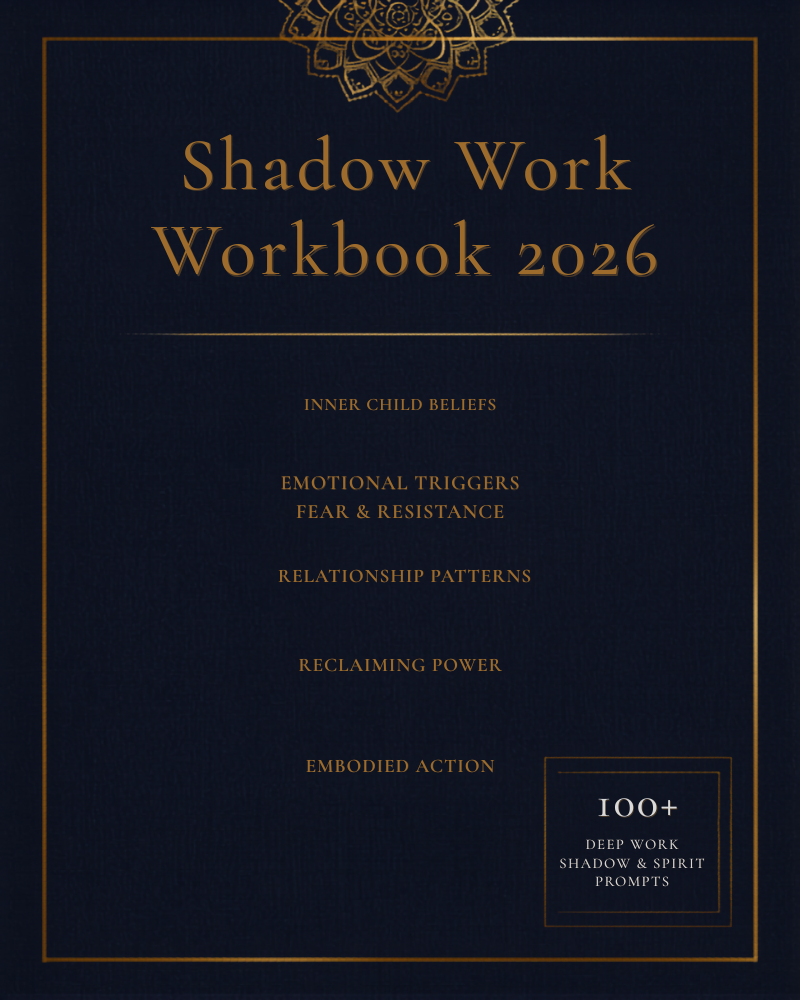
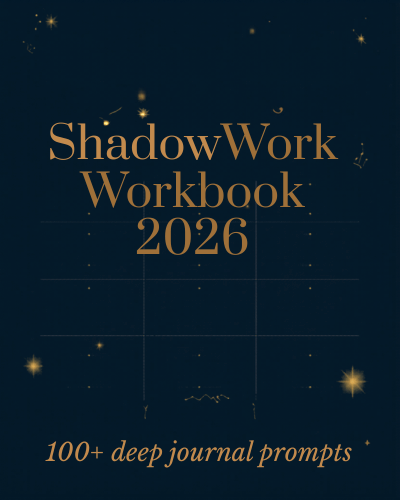
If you’re ready to commit to a consistent shadow work practice, a structured workbook makes an enormous difference. Our Shadow Work Workbook 2026 is built specifically for this journey — with 90+ layered prompts, integration exercises, and space to track your growth over the year, available in both printable and fillable digital formats.
How Often Should You Practice Shadow Work?
There’s no perfect frequency — but consistency matters more than intensity. Even 10–15 minutes of intentional journaling two to three times per week will create measurable shifts over time. Consider building shadow work into a ritual: a Sunday morning before the week begins, a new moon evening, or a dedicated Thursday practice. Ritual context reinforces the container and helps you show up even when motivation is low.

The Promise of the Work
Shadow work is not comfortable. It asks you to turn toward the parts of yourself you’ve spent years running from. But on the other side of that honest reckoning is something rare: a life lived from wholeness rather than unconscious reaction. You stop projecting your unacknowledged wounds onto relationships. You stop self-sabotaging when good things arrive. You stop living inside a smaller version of yourself than you actually are.
The journal is just the beginning. But it’s exactly the right place to start.
📩 Get Your Free Moon + Manifestation Guide
Before you go — if shadow work resonates with you, you’ll love what we’ve put together for our inner circle. Every month, subscribers receive lunar guidance, journaling prompts, and tools for intentional living — delivered straight to your inbox.
Published by Growing Success / Enlightened Publications. We create tools for real transformation — journals, workbooks, and guides for people doing the honest work of becoming.
What Makes a Shadow Work Journal Actually Work
Most shadow work journals on the market are the same product with different covers: a list of prompts, generous white space, and no teaching. They sell well and get abandoned around page twenty, for a reason that becomes obvious once you have used one. A prompt without context asks you to already know what you are looking for.
A journal that works has four properties, and you can check any of them before you buy.
- It teaches before it asks. Every section should explain the mechanism it is working with, so the question makes sense when you reach it.
- No prompt repeats. Flick through the middle. If you see the same question in different words three times, you are buying padding.
- Every question is answerable today. Nothing should require information you do not have or a concept explained fifty pages later.
- It is readable. Type large enough to read at night without strain, and enough space to actually write in.
Printable or Fillable: Choosing the Right Format
This is a more consequential choice than people expect, and the right answer depends on how you actually behave rather than what you admire.
Choose printable if
You think better with a pen, you want the physical act of slowing down, you find screens activating in the evening, or you want to be able to tear a page out and destroy it. Handwriting is slower, and the slowness is doing real work here.
Choose fillable if
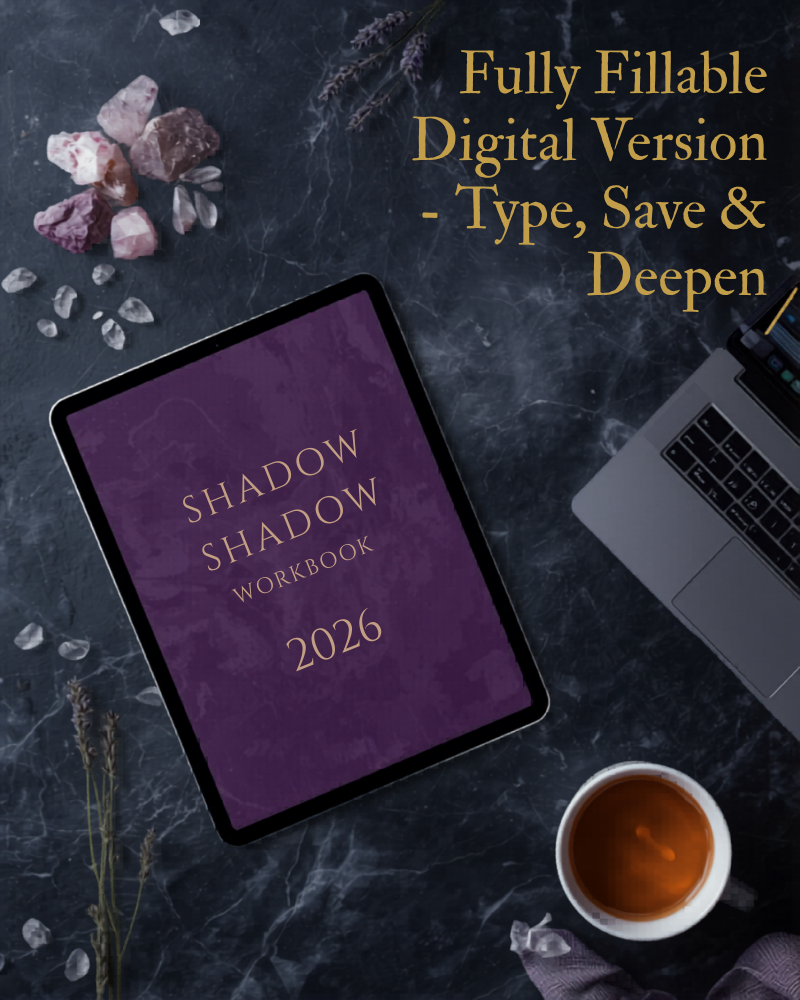
You type far faster than you write, your handwriting frustrates you, you want the pages searchable later, you travel, or privacy at home means a file with a password is safer than a notebook on a shelf. That last consideration is not minor for many people.
Choose both if
You want to handwrite the difficult sections and type the long ones, which is what most people actually do once they have tried each.
Setting Up the Practice So It Survives Week Three
Almost all abandonment happens between day ten and day twenty-five. The setup decisions made on day one determine whether you get through it.
- Fix the time and the place. Same chair, same part of the day. Decision-making is the tax that kills practices.
- Set a floor, not a target. Three lines counts as a completed day. A floor you can meet exhausted is what carries a practice through a hard fortnight.
- Decide in advance what happens when you miss. Never miss twice is a good default and requires no self-criticism.
- Sort out privacy before you start. If any part of you is composing for an imagined reader, you will write the acceptable version. A locked file or a genuinely private shelf changes what you are able to say.
- Plan the landing. Something ordinary and physical after every session. The practice needs a door out as much as a door in.
What the First Ninety Days Look Like
The arc is fairly consistent across people, and knowing it in advance removes most of the alarm.
- Days 1 to 10. Interesting and slightly performative. You are still writing the version you would not mind being read.
- Days 10 to 25. The hard stretch. Resistance, boredom, and the strong feeling that this is not working. It is working; this is what the middle feels like.
- Days 25 to 60. Patterns start repeating across entries, and the repetition is the point. You begin recognising your own material rather than discovering it fresh each time.
- Days 60 to 90. The change shows up outside the notebook first, usually as a slightly longer gap between a trigger and your reaction. Most people notice it by accident.
Safety, Briefly and Seriously
Shadow work moves towards difficult material deliberately. Keep sessions time-boxed, end with something ordinary, and do not use a journal to excavate active trauma on your own. If what surfaces is overwhelming, intrusive, or affects your ability to function, that is the point at which a licensed professional is the right tool rather than a longer practice.
Frequently Asked Questions About Shadow Work Journals
How long should each session be?
Fifteen to twenty-five minutes, with a timer. Long sessions feel productive and are much harder to repeat, and repetition is what produces the change.
Should I reread my entries?
Weekly, not daily. Same-day rereading turns into editing and self-criticism. Weekly review is where the recurring material becomes visible.
What do I do with the pages afterwards?
Keep them if they feel useful to return to, destroy them if the knowledge that they exist stops you writing honestly. Both are legitimate, and honesty on the page matters more than the archive.
Can I do shadow work alongside therapy?
Yes, and it often works particularly well that way, as the thing that holds the days between sessions. Tell your therapist you are doing it so the two can inform each other.
Begin With the Setup, Not the First Prompt
Before you write anything, decide the time, the place, the floor and the rule for missing a day. Write those four things on the first page. That page is why the practice will still be running in March.
The shadow work journals below are built to the four standards at the top of this article: teaching before every question, no prompt repeated across ninety days, nothing that requires knowledge you do not yet have, and type set large enough to read by lamplight. Available printable, fillable, or both.
Choosing Between Ninety Days and a Year
Journals in this category tend to come in two shapes: a defined ninety-day programme or an open-ended book you fill at your own pace. They suit different people and the mismatch is a common reason a journal goes unfinished.
- Choose a ninety-day programme if you work well to a structure, want the decisions made for you, and know that an open notebook tends to stay closed. The container does the motivating.
- Choose an open-ended book if fixed programmes make you rebellious, your weeks are unpredictable, or you already have an established writing habit and want prompts rather than a schedule.
If you genuinely do not know, start with the defined programme. It is easier to loosen a structure you find too tight than to invent one halfway through an open notebook, and the ninety-day shape tells you something useful about your own pacing either way.
One Page Before You Begin
Whatever journal you choose, spend the first page on the setup rather than on the first prompt: time, place, floor, missed-day rule, where it lives, and what you do afterwards to land.
Six lines. It is the least interesting page in the book and it is why the practice will still be running in three months, which no amount of enthusiasm on day one can achieve on its own.