What Is Human Design and How to Use It for Self-Growth
What if the reason you’ve struggled to stick to certain habits, reach certain goals, or feel energized by your work has less to do with willpower — and more to do with the fact that you’ve been living by someone else’s design?
Table of Contents
The short version: what is Human Design, in practical terms, is a synthesis system that gives you five things to work with — type, strategy, authority, profile, and your centres, channels and gates. Below you will find each one explained, what defined and open centres actually mean, and a ninety-day way to test it. If you are asking what is Human Design and want something usable rather than a personality label, start with strategy and authority.
That’s the central question Human Design asks. And for the people who take it seriously, the answers change everything.
This guide breaks down what Human Design is, explains the five energy types, and — most importantly — shows you how to actually use your design as a practical tool for self-growth, better decisions, and a life that finally feels like yours.
What Is Human Design?
Human Design is a synthesis system developed by Ra Uru Hu (born Alan Robert Krakower) in 1987, following a reported mystical experience. He spent the following decades codifying a framework that merges four ancient wisdom traditions — the I Ching, Kabbalah, astrology, and the Hindu-Brahmin chakra system — with modern quantum physics and genetics.
The result is a detailed energetic blueprint, calculated from your birth date, time, and location, that maps how your unique energy operates in the world: how you make decisions, how you process information, how you best interact with others, and where you’re most likely to experience resistance if you’re operating outside your design.
Unlike a general personality test, Human Design is highly specific to the individual — and it’s not prescriptive about who you should become. Instead, it illuminates who you already are, and where you’ve been living in misalignment with your own nature.
The key framework: Every person has a Type, a Strategy, and an Authority. These three elements form the practical core of how to live your design.
The 5 Human Design Types
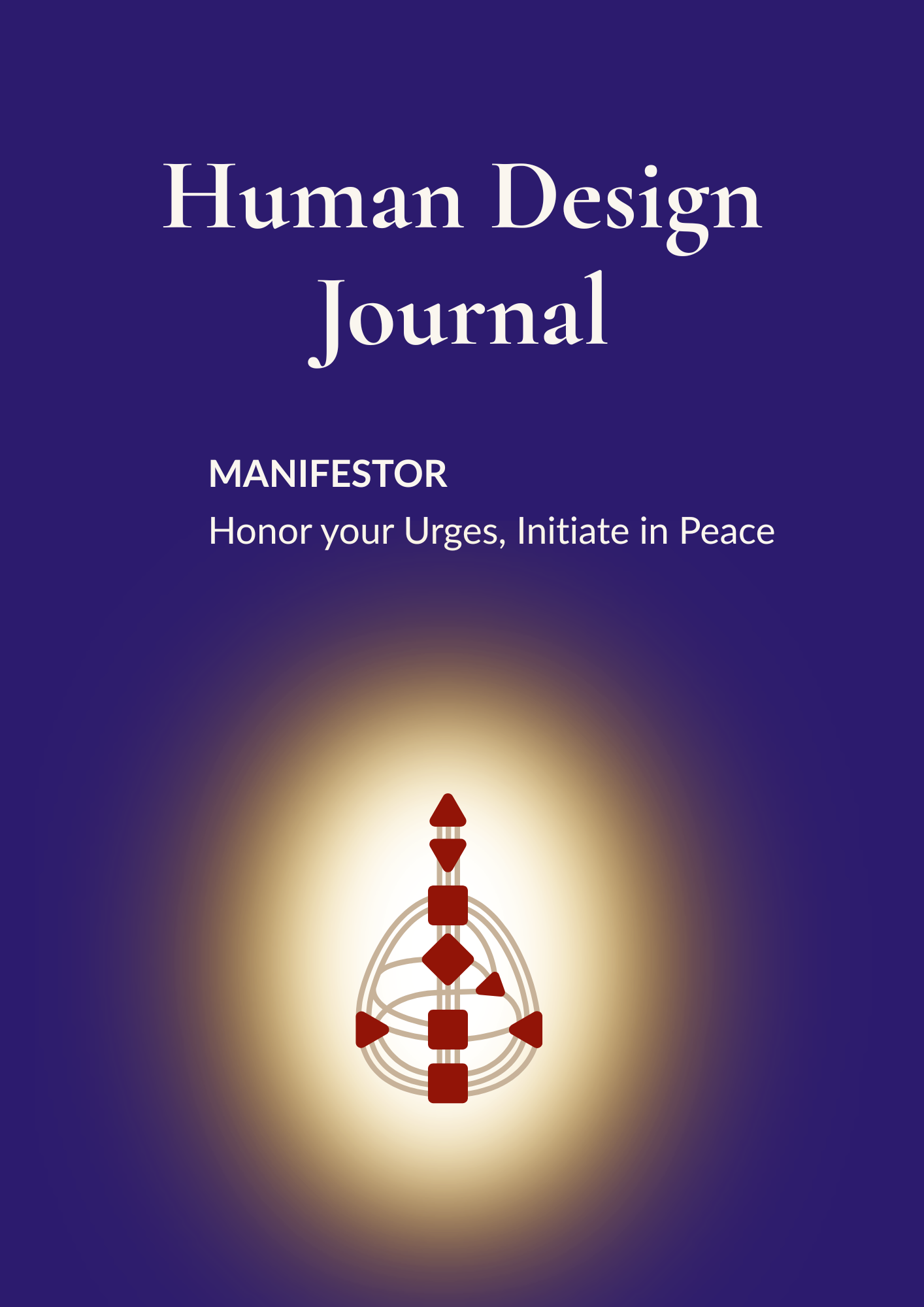
1. Manifestors (~9% of the population)
Manifestors are the initiators — they have the energetic capacity to impact others and start things from nothing. Their aura is closed and repelling, which means they often feel like they need to prove themselves or ask for permission — when in reality, they’re designed to inform others of their plans and then act.
Strategy: Inform before initiating
Challenge: Asking for permission they don’t need; suppressing their natural impact
Gift: The ability to open doors no one else can reach
2. Generators (~37% of the population)
Generators are the life force of the planet — they have consistent, sustainable energy that’s designed to be engaged with work they love. The key for Generators is responding: rather than initiating, they wait for something in their environment to respond to, and let their gut (sacral) response guide them.
Strategy: Wait to respond
Challenge: Initiating from the mind rather than the gut; saying yes to the wrong things out of obligation
Gift: Mastery and satisfaction when aligned with their true work
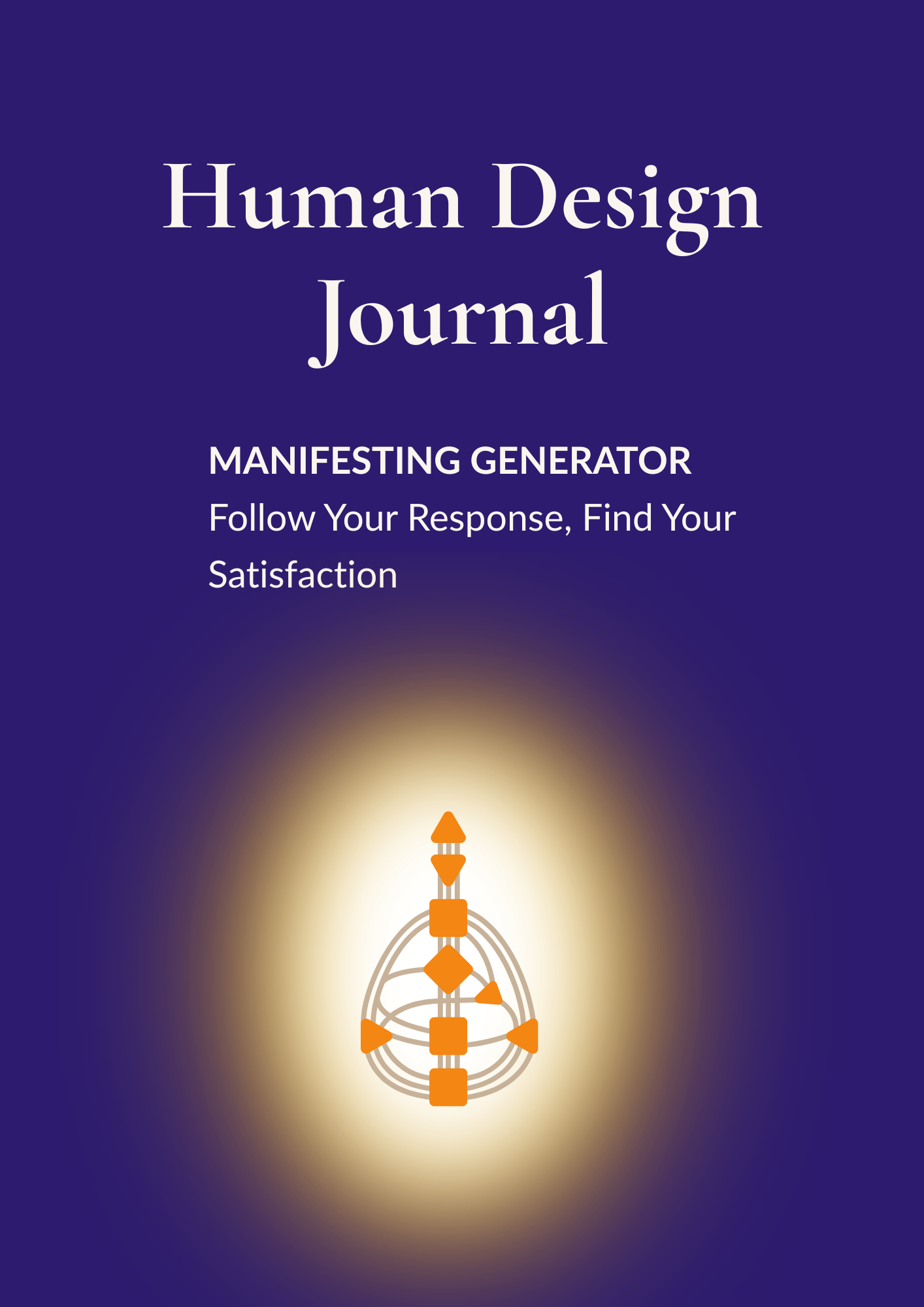
3. Manifesting Generators (~33% of the population)
Manifesting Generators are a hybrid type — they have Generator-like sustainable energy but Manifestor-like capacity to impact. They’re multi-passionate, fast-moving, and often skip steps that others need. They’re designed to be efficient and experimental, not linear.
Strategy: Respond first, then inform
Challenge: Feeling guilty about changing direction or losing interest; trying to be “consistent” in ways that don’t fit their design
Gift: Speed, versatility, and the capacity to do many things brilliantly
4. Projectors (~20% of the population)
Projectors are the guides and strategists of the Human Design system. They are designed to see into others — to understand systems, people, and how to optimize energy in a group. But their energy is non-sustainable and invitation-dependent. When they try to work like Generators, they burn out.
Strategy: Wait for the invitation
Challenge: Initiating without invitation; overgiving and exhausting themselves
Gift: Extraordinary insight, the ability to guide others to their highest potential
5. Reflectors (~1% of the population)
Reflectors are the rarest type, and the most environmentally sensitive. They have no defined energy centers — they take in and amplify the energy of everyone around them, and reflect back the health of the communities they’re in. They need significant time (ideally a full lunar cycle) to make major decisions.
Strategy: Wait a lunar cycle for major decisions
Challenge: Absorbing others’ energy and thinking it’s their own; rushing decisions
Gift: A unique capacity for objectivity and wisdom — they see what others cannot
Strategy and Authority: The Two Tools You’ll Actually Use Daily
Your Type and Strategy tell you how to move through the world. Your Authority tells you how to make decisions that are correct for you.
There are 7 inner authorities in Human Design. The most common include:
- Sacral Authority (Generators/MGs): Your gut response — the immediate “uh-huh” or “unh-unh” your body gives before your mind has time to analyze. Learn to trust it.
- Emotional Authority: You need time to move through your emotional wave before making decisions. Never decide at the peak of emotion (excitement or distress) — wait for clarity.
- Splenic Authority: A quiet, in-the-moment intuitive hit. It won’t repeat itself. If you feel it once, it’s real.
- Self-Projected Authority (Projectors): You find clarity by talking through a decision — not for feedback, but for your own inner GPS to activate through your own voice.
- Mental/Outer Authority (Reflectors and some Projectors): Clarity comes from dialogue with trusted others and from time. You’re not designed to make important decisions in isolation or in a rush.
The moment-to-moment practice of Human Design is simple: follow your Strategy, trust your Authority, and notice where you’ve been overriding both.
How to Use Human Design for Self-Growth: 5 Practical Applications
1. Stop Following Generic Productivity Advice
Most productivity frameworks are built for one type: the Generator (or its cultural equivalent — the person with sustainable daily energy who does their best work through consistent linear effort). If you’re a Projector trying to match a Generator’s output, you’ll burn out. If you’re a Reflector making weekly decisions on an arbitrary timeline, you’ll keep choosing wrong.
Your first act of self-growth through Human Design: identify which mainstream advice doesn’t fit your design — and give yourself permission to let it go.
2. Reframe Your “Weaknesses” as Design Features
The Manifestor who keeps blowing up relationships by surprising people with sudden moves isn’t broken — they’re just not informing. The Projector who feels exhausted when they work a standard 8-hour day isn’t lazy — they’re energetically incompatible with that structure.
Human Design reframes your “problem areas” as places where you’ve been living out of alignment with your design — not as character flaws to be fixed.
Use this as a journaling entry: “Where in my life have I been working against my design? What would it look like to lean into how I’m actually built?”
3. Use Your Authority for Real-Time Decision-Making
Stop making decisions with your head alone. Begin experimenting with your Authority — whatever form it takes — for small decisions this week. Notice what happens when you follow it versus when you override it.
This is the “experiment” aspect of Human Design: it’s not a belief system. It’s a lived experiment. The proof is in whether life flows with less resistance when you follow your design.
4. Pair Human Design with Deeper Inner Work
Human Design is a map of your design — but it doesn’t excavate the conditioning that took you away from it. That’s where inner work comes in.
Most people can identify their Type intellectually without changing anything. The work is in uncovering why you stopped trusting your sacral response, or what made you believe waiting for an invitation meant you were less valuable, or when you decided your emotional wave was a liability instead of a gift.
Pairing Human Design awareness with tools like shadow work journaling dramatically accelerates the integration process. Understanding why you conditioned yourself gives the map a depth that raw data can’t provide.
Our Shadow Work Workbook 2026 is designed to do exactly this — excavate the root beliefs that took you out of your nature, so you can return to it with your eyes open.
→ Explore the Shadow Work Workbook 2026 in all its forms. We offer printable, fillable and a bundle of both formats.
5. Set Goals That Work With Your Design, Not Against It
Most goal-setting frameworks assume a linear, relentless push toward an outcome — perfect for Generators, but actively harmful for Reflectors or Projectors who need rest, invitation, and cyclical rhythms.
Design your goals with your Type in mind:
- Generators/MGs: Set goals in response to what genuinely lights you up — and trust the pivot when the energy fades.
- Projectors: Set goals around your zone of mastery and the invitations you want to cultivate. Focus on being seen for what you do best.
- Manifestors: Set goals that allow for initiating, informing, and then detaching from others’ reactions.
- Reflectors: Set goals in community, with long timelines, and honor your need for a lunar cycle before committing.
Where to Start
- Get your free Human Design chart at any reputable chart generator (Jovian Archive, MyBodyGraph, or Free Human Design Chart sites)
- Identify your Type, Strategy, and Authority — these three alone will give you 80% of the practical value
- Experiment for 90 days: follow your Strategy and Authority consistently and observe what shifts
- Journal what comes up: where do you resist your design? What conditioning is underneath that resistance?
The experiment is the point.
📩 Free Resource: Moon Guide + Monthly Intention Tools
If Human Design resonates with you, you’ll find our free Moon Guide a natural complement — lunar rituals and monthly intention-setting tools designed to work with your natural cycles rather than against them.
Download the free Moon Guide here →
It’s free, it’s grounded, and it’s designed for people who are done following someone else’s blueprint.
Published by Growing Success / Enlightened Publications. We create tools for people who are ready to stop performing a life and start living their own.
The Five Things a Human Design Chart Tells You
Human Design is a synthesis system, combining ideas from astrology, the I Ching, the chakra system and the Kabbalistic tree of life into a single diagram calculated from your birth date, time and place. Whatever you make of its origins, the useful question is what it actually gives you to work with, and the answer is five things.
1. Type
One of five: Generator, Manifesting Generator, Projector, Manifestor or Reflector. Type describes how your energy is designed to engage with work and other people, and it is the piece that changes the most in day-to-day life once you take it seriously.
2. Strategy
The behavioural instruction that goes with your type. Respond, wait for the invitation, inform before you act, wait a full lunar cycle. Strategy is the practical part, and it is where almost all of the benefit sits.
3. Authority
How you are designed to make decisions. Sacral, emotional, splenic and others. Authority answers the question of what to consult when you are deciding, and for many people it is more useful than type, because it is more immediately testable.
4. Profile
Two numbers between one and six, describing the role you tend to play and how you learn. Profile explains a great deal about why some people learn by studying and others only ever learn by doing it wrong first.
5. Centres, channels and gates
The detailed mechanics: which of the nine centres are defined or open, which channels connect them, and which specific gates are active. This is the layer that turns a general type description into something specific to you, and it is where most people stop reading, which is a pity because it is where the actual self-knowledge lives.
Defined and Open Centres, and Why They Matter Most
A defined centre is consistent: it produces its energy reliably and you can depend on it. An open centre is variable: it takes in and amplifies whatever is around it, which means your experience of it changes depending on who is in the room.
This is the single most immediately useful concept in the system, because open centres explain a very common experience: feeling like a different person depending on the company. That is not inconsistency. In this framework it is an open centre doing exactly what it does, and knowing which ones are open tells you where you are most likely to be reading someone else’s state as your own.
What Human Design Is and Is Not
It is a framework for self-observation. Its value comes from giving you a specific hypothesis to test against your own experience over months, rather than from being externally verified. Used that way it is genuinely useful, and many people find it clarifies things about their energy that nothing else has.
It is not a science, not a diagnosis, and not a reason to override what you observe about yourself. If your chart says one thing and eighteen months of careful noticing says another, trust the noticing. Any framework that asks you to distrust your own evidence is being used badly.
How to Actually Experiment With It
The system is large and the temptation is to read everything. The people who get real value from it almost all did the opposite: they took one instruction and ran it for months.
- Get an accurate chart. Birth time matters, and a few minutes can change your profile and authority. Use a birth certificate if you can.
- Start with strategy alone. Ignore gates and channels for the first three months. Strategy is the piece with the highest return.
- Test it in low stakes. Apply it to what you eat and how you spend an evening long before you apply it to a career decision.
- Write it down. The effect is cumulative and subtle, and without a record you will not be able to tell whether anything changed.
- Give it ninety days. Anything shorter is atmosphere rather than evidence.
Frequently Asked Questions About Human Design
Do I need my exact birth time?
For type and strategy, an approximate time is often sufficient. For authority, profile and the finer mechanics, minutes matter. If your time is uncertain, treat the detailed layers as provisional.
What if I do not recognise myself in my type?
That is common early on, particularly for people who have spent years operating against their design. It is also sometimes a sign of an inaccurate birth time. Give strategy a genuine trial before concluding either way.
Is Human Design compatible with astrology?
It incorporates astrological calculation as one of its inputs, so they overlap without saying the same thing. Plenty of people use both, and the two answer different questions.
Can it tell me what career to have?
Not directly, and treat anyone who says otherwise with caution. What it can usefully describe is how you are designed to engage with work, which narrows the field considerably without naming a job.
Where to Start
Get your chart, find your type and strategy, and write those two things on the first page of a notebook. Then spend ninety days testing the strategy in ordinary decisions and recording what happened. That is the whole experiment, and it is more valuable than reading another twenty articles.
The Human Design journals below carry that ninety days in dated form for each type. Volume I is prompt-led and personal for readers who already know their type. Volume II teaches your centres, gates and channels in full and then applies them, with more than four times the writing space.
What Is Human Design, In One Paragraph?
What is Human Design? A framework calculated from your birth data that describes how your energy is built to engage with work and people. Its value is as a hypothesis to test against your own experience over months. Anyone telling you what Human Design guarantees has left the useful part behind.