
How to Read Your Human Design Chart: A Beginner’s Step-by-Step Guide
You pulled up your Human Design chart, saw a tangle of triangles, squares, lines, and numbers, and quietly closed the tab. You are not alone. Learning how to read your Human Design chart feels overwhelming at first, because the BodyGraph holds a lot of information at once.
The good news: you do not need to understand every gate and channel to get life-changing clarity. You need to read four things, in the right order, and then give yourself time to live them. This guide walks you through exactly that, so your chart stops being a confusing image and becomes a practical map of how you are designed to make decisions, spend energy, and trust yourself.
First, Get Your Free Human Design Chart
Your chart is calculated from your birth date, exact birth time, and birth location, so accuracy matters, especially the time. Generate your free BodyGraph at MyBodyGraph or the official Jovian Archive. If you do not know your birth time, try to find it on your birth certificate, because even a few minutes can change your authority and profile. Once you have your chart open in front of you, you are ready to read it in layers instead of all at once.
The Four Things to Read First (and Why Order Matters)
Human Design has endless depth, but beginners get the most value from four foundational elements: your Type, your Strategy, your Authority, and your defined versus open Centers. Read them in that order. Each one builds on the last, and together they give you a roadmap you can actually use in daily life long before you ever learn a single gate.
Step 1: Your Type
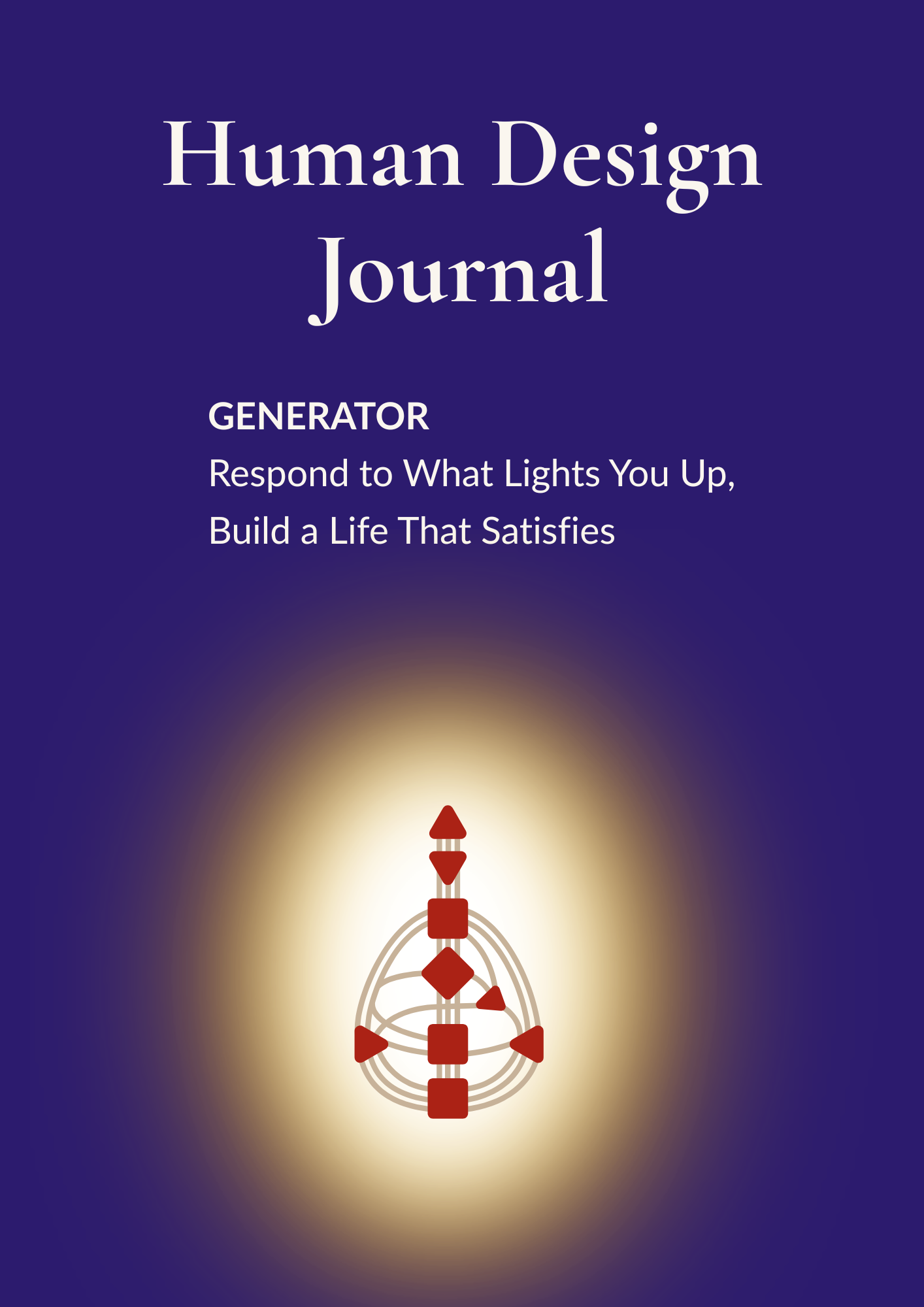
Your Type is the headline of your chart and describes the general way your energy is built to operate. There are five: Generators and Manifesting Generators (the builders, with steady life-force energy that thrives on responding to what excites them), Projectors (the guides, designed to see and direct energy when invited), Manifestors (the initiators, here to start things), and Reflectors (the rare mirrors who sample the energy around them). Knowing your Type tells you the broad rules of your game.
If you are a Generator or Manifesting Generator, for example, your power comes alive when you respond to life rather than force it. If you want to go deeper on the most common and most misunderstood type, read what it really means to be a Manifesting Generator.
Step 2: Your Strategy
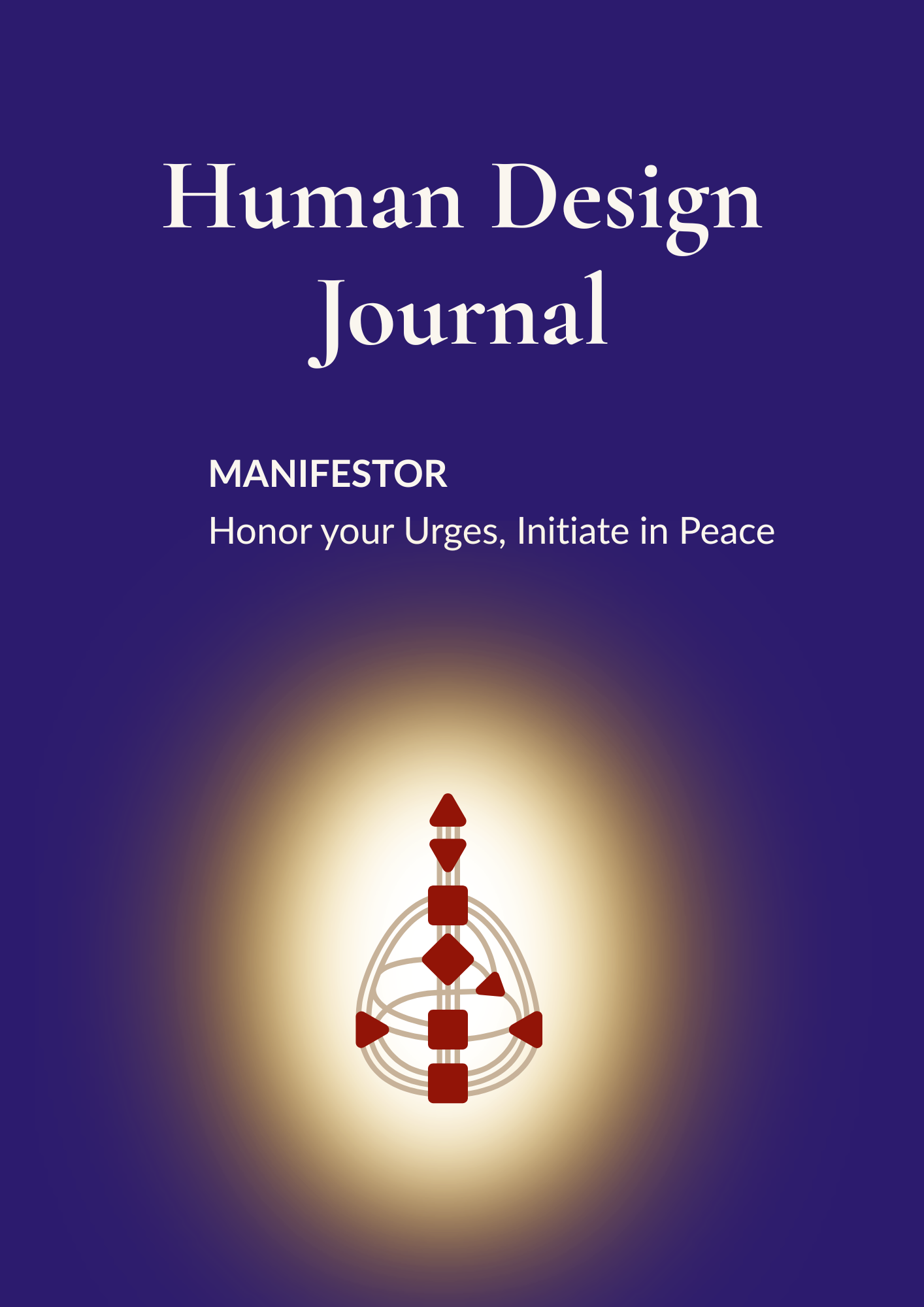
Strategy is how your Type is meant to engage with the world, and it is the single most practical thing in your chart. Generators and Manifesting Generators are designed to respond rather than initiate, waiting for something to react to before leaping in. Projectors are meant to wait for the invitation and recognition. Manifestors are here to inform others before they act. Reflectors take a full lunar cycle before big decisions. When you live your Strategy, life meets you with less resistance. When you ignore it, you hit the same frustrating walls again and again. Your chart names your Strategy right beside your Type.
Step 3: Your Authority
Authority is your built-in decision-making compass, and it answers the question that runs most people’s anxiety: how do I know what is right for me? Your chart lists one. Emotional authority means you are designed to ride a feeling wave and never decide in the heat of the moment, waiting instead for clarity over time. Sacral authority (common for Generators and Manifesting Generators) means your gut gives an in-the-moment yes or no you can feel in the body.
Splenic authority is a quiet, instinctive knowing that speaks once. There are a few others, but the point is the same: your mind is not your authority. Learning to trust the decision-making style you were actually built for is where Human Design becomes life-changing.
Step 4: Defined vs. Open Centers
The nine shapes in your BodyGraph are Centers, and they are either colored in (defined) or white (open). Defined Centers are consistent, reliable parts of who you are; you can count on that energy. Open Centers are where you take in and amplify energy from other people, which makes them the places you are most easily conditioned, pressured, or drained. An open Emotional Center, for instance, may absorb a room’s tension and mistake it for your own. Reading your Centers shows you where you are solid and where you are wise to ask, is this feeling actually mine? That single question can change your relationships and your peace.
After the Basics: Gates and Channels
Once Type, Strategy, Authority, and Centers feel familiar, you can begin exploring the numbered Gates and the Channels that connect them. These add nuance and specific gifts, but they are advanced detail, not the foundation. Many people rush here first, get lost, and give up. Resist that. The four basics will carry you for months, and the gates will mean far more once you have lived the fundamentals in your own body. For a gentler conceptual overview before you go deeper, revisit what Human Design is and how to use it for self-growth.
Why Journaling Your Chart Changes Everything
Here is what most chart guides leave out: learning to read your Human Design chart is not the same as living it. You can memorize that you have sacral authority and still override your gut every single day. Information becomes transformation only through practice, and journaling is the simplest, most powerful practice there is. When you write down the decisions you made by Strategy and Authority, and what actually happened, you build a personal record that teaches your nervous system to trust your design. Over a few weeks, the abstract becomes obvious. You stop needing to look up your authority because you can feel it.
Journal Prompts to Read Your Chart Deeper
Use these to move your chart from your head into your life: When did I last honor my Strategy, and how did it feel in my body? Where did I override my Authority this week, and what was the cost? Which of my open Centers do I think I am absorbing from others right now? What would change if I fully trusted that I am designed to make decisions my own way? Where am I still living by someone else’s rules instead of my own design? Write freely. Your answers, gathered over time, become the most accurate Human Design teacher you will ever have: your own lived experience.
Common Mistakes Beginners Make
The first mistake is starting with the gates and channels and drowning in detail. Start with the four basics instead. The second is treating your Type as a personality label to perform rather than an energy mechanics to experiment with. The third is reading your chart once, feeling seen for an afternoon, and never returning.
Human Design is not a horoscope you consume; it is an experiment you run on your own life. The fourth is using an inaccurate birth time, which can mislabel your authority, so verify it if you can. Avoid these four and you will get more from your chart in a month than most people get in a year.
How to Go Deeper
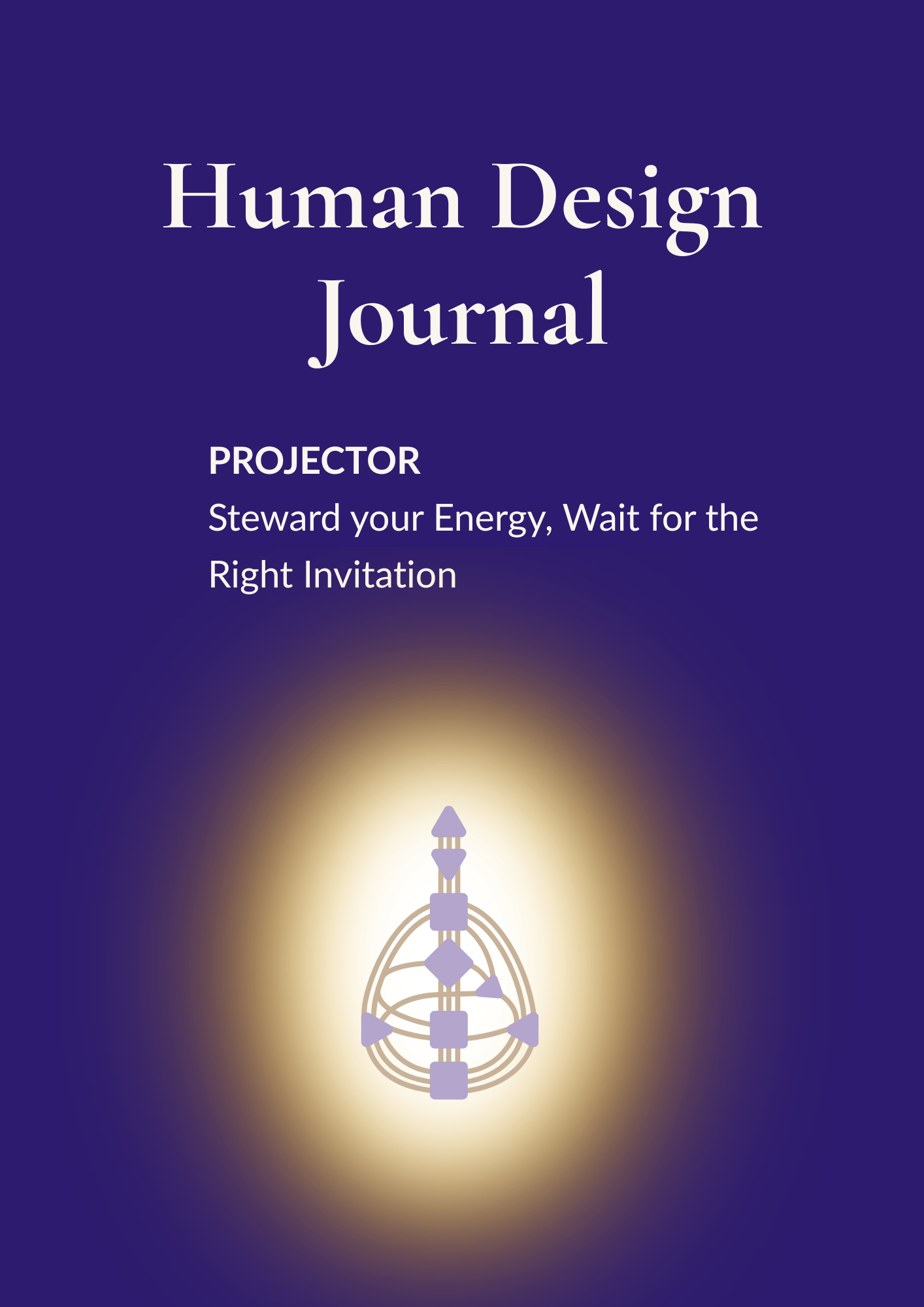
The fastest way to actually integrate your design is to journal it consistently, and a structured prompt practice removes the guesswork. Our Human Design journals are made one for each of the five Types, and you can find them in the Growing Success shop. Each one guides you through reading and living your chart with daily decision-tracking and deconditioning prompts built for your specific Type. Not sure which journal fits where you are right now? Take our quick find your journal quiz and we will point you to the right starting place.
Your chart was never meant to be decoded perfectly on the first read. It is meant to be lived, tested, and trusted, one honest decision at a time. When you read your Human Design chart this way, starting with your Type, following your Strategy, learning your Authority, and noticing your Centers, you let your own experience fill in the rest. You are not complicated. You are designed, and now you have the map.
A Simple Daily Practice to Live Your Chart
You do not need an hour or a spreadsheet. You need five minutes and a willingness to experiment. Each morning, name your Strategy and Authority in a single line, almost like setting an intention: Today I respond instead of force, and I check my gut before I commit. Throughout the day, when a decision shows up, pause for one breath and consult your Authority before your mind jumps in.
Each evening, jot down one decision you made by design and one you made from old conditioning, with no judgment, just data. Within two weeks this tiny loop rewires how you choose. The chart stops being theory and becomes a felt sense you carry into every room. This is the difference between knowing your Human Design and actually living it, and it is available to you starting tonight.
Be patient with yourself in the beginning. Decades of conditioning taught most of us to lead with the mind and ignore the body’s quieter signals, so honoring your Strategy and Authority can feel unfamiliar at first. That awkwardness is not a sign you are doing it wrong. It is the feeling of returning to yourself after a long time away.
Frequently Asked Questions About How to Read Your Human Design Chart
Do I need my exact birth time? Ideally yes. Your birth time sets your Authority and Profile, and even a few minutes can shift them, so check your birth certificate if you can. If you truly cannot find it, start with your Type and Strategy, which are less time-sensitive.
How long does it take to learn how to read your Human Design chart? You can grasp the four foundations in an afternoon, but living them is the real work. Most people feel genuinely fluent after a few weeks of journaling their decisions by Strategy and Authority.
Where should I start? Always begin with Type, then Strategy, then Authority, then your defined and open Centers. Save gates and channels for later, once the basics feel like second nature.
Download a free guided practice from our Free Resources library and start trusting the way you were built to decide.
Reading the Diagram in the Right Order
A Human Design bodygraph is dense, and the usual mistake is reading it in the order the eye wants to, which is wherever the colour is. There is a sequence that makes it comprehensible, and following it turns an intimidating picture into four straightforward observations.
- First, the nine shapes. Note which are filled and which are white. Nothing else yet.
- Second, the type and strategy printed alongside the chart. This is your headline.
- Third, the authority. One line, and the most practically useful item on the page.
- Fourth, the profile numbers. How you learn and what role you tend to take.
- Only then, the channels and gates. The detail is meaningless until the frame is in place.
The Nine Centres, and What Each One Governs
The nine shapes are centres, each associated with a domain of experience. What matters more than the associations is whether each one is defined, meaning coloured in, or open, meaning white.
- Head. Inspiration and mental pressure — the source of questions.
- Ajna. Conceptualisation and certainty — how thinking is processed.
- Throat. Expression and manifestation — where things become words or action.
- G Centre. Identity, love and direction.
- Heart or Ego. Willpower, worth and promises made.
- Sacral. Life force energy and availability for work.
- Solar Plexus. Emotional waves and feeling.
- Spleen. Instinct, timing, health and immediate knowing.
- Root. Pressure, drive and adrenaline.
Defined Versus Open, in Practical Terms
Defined centres are consistent. They generate their quality reliably, you can count on them, and other people experience that consistency in you. Open centres are variable. They take in and amplify what is around them, which means the way you experience that domain depends heavily on the company you are in.
The practical reading is this: your defined centres are where you can be relied upon, and your open centres are where you are most likely to mistake someone else’s state for your own. An open Solar Plexus in a room with an angry person is the classic example, and recognising it in real time is genuinely useful.
The question to ask of every open centre
Not “what is wrong with me here?” but “whose is this?” People with open centres frequently spend years trying to fix an inconsistency that is not a fault at all. The alternative reading is that this is where you are designed to be sensitive to, and wise about, other people.
Channels and Gates, Without the Overwhelm
A channel is a line connecting two centres, and having one coloured in is what defines those centres. A gate is one end of a channel — sixty-four in total, mapped to the hexagrams of the I Ching.
Do not attempt to learn all sixty-four. Start with the channels you actually have, which is usually a handful, and read only those. Each one describes a consistent trait, and reading three of your own channels carefully will tell you more than skimming a list of all thirty-six.
Common Misreadings
- Treating white as empty. Open centres are not deficits. They are where you take in and amplify, which is a different thing entirely.
- Reading gates before strategy. The detail is fascinating and the strategy is what changes your week. Order matters.
- Assuming more definition is better. It is not a scoreboard. A highly defined chart is consistent and inflexible; an open one is adaptable and easily influenced. Both have costs.
- Ignoring the birth time problem. A few minutes can change profile and authority. If your time is uncertain, treat those layers as provisional.
- Reading it once and stopping. The chart is a hypothesis to test over months, not a personality result to collect.
A Ninety-Day Way to Learn Your Own Chart
- Weeks 1 to 4. Strategy only. One line each evening on where you followed it and what happened.
- Weeks 5 to 8. Authority. Track decisions and how you made them, and note the outcome a week later.
- Weeks 9 to 10. Open centres. Each evening, name one thing you felt that on reflection may have belonged to someone else in the room.
- Weeks 11 to 13. Your channels, one per session, with an example from your own life for each.
Frequently Asked Questions About Reading a Human Design Chart
Where do I get an accurate chart?
Any reputable calculator using your birth date, exact time and place will produce the same bodygraph. Accuracy of the birth time matters far more than which calculator you use.
What if I do not know my birth time?
Work with type and strategy, which are often stable across a range of times, and treat authority and profile as unconfirmed. Some people pursue chart rectification with a professional astrologer, which is a considerable undertaking.
Which is more important, type or authority?
Strategy and authority together are the working pair, and if you only ever use two things from the system, use those. Type is the label; strategy and authority are the instructions.
How long before the chart makes sense?
The frame makes sense in an afternoon. Recognising it in your own life takes months, and the recognising is the part that changes anything.
Start With Four Observations
Open your chart and write down four things: which centres are filled, your type, your strategy and your authority. That is the whole first session. Everything else can wait until those four are familiar.
The Human Design journals below carry the ninety-day sequence in dated pages. Volume I is prompt-led and personal for readers who already know their type. Volume II teaches every centre, gate and channel in full and then applies them to your own chart.