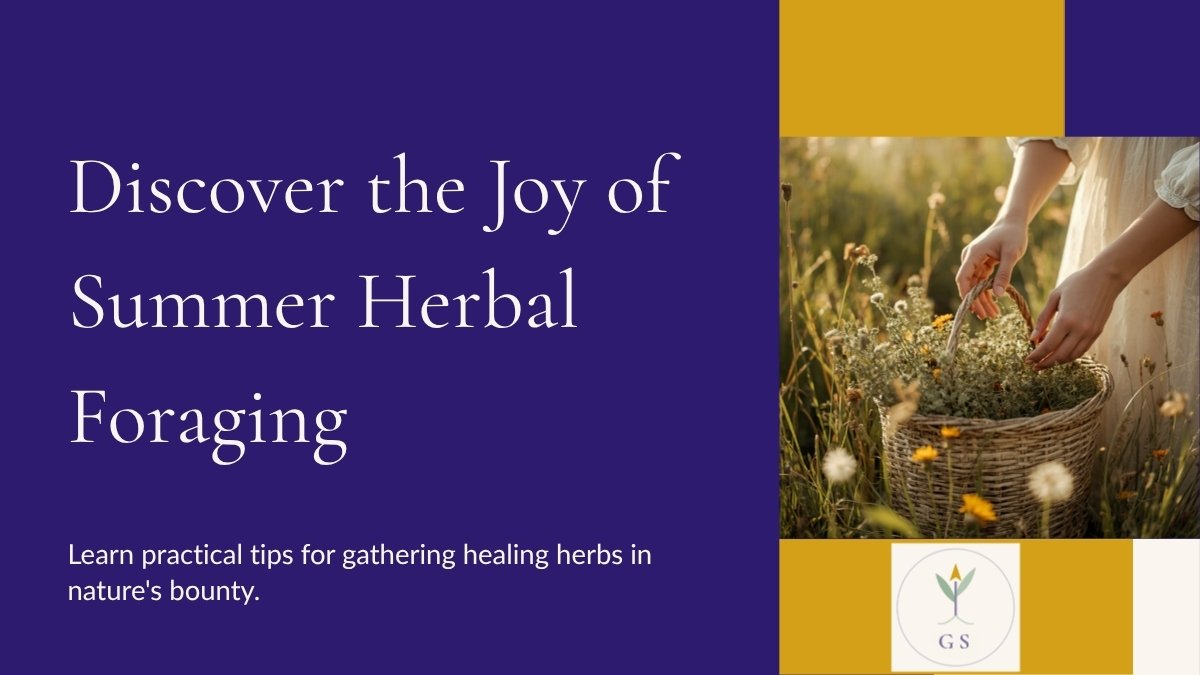
Herbal Foraging for Beginners: 12 Summer Plants You Can Find Almost Anywhere
Table of Contents
The short version: herbal foraging is a calendar practice more than a location practice, and the skill is built by learning three plants completely rather than thirty superficially. Below you will find the safety rules that matter, how to read habitat, and why every serious herbal foraging practice keeps written records.
Herbal foraging — gathering wild plants for food, tea, and home remedies — is one of the oldest relationships humans have, and summer is the most generous season to begin. The meadows and woodland edges of June through August offer more beginner-friendly plants than any other time of year, many of them growing in your own backyard, dismissed as “weeds.” But foraging is more than free groceries. To kneel beside a plant, learn its name, and harvest it with care is to remember that you belong to the living world. It’s a practice of attention — and attention, as every journal-keeper knows, is a form of love.First, the Safety Rules (Non-Negotiable)
- 100% identification or zero harvesting. Never eat a plant you’re not completely certain about. Cross-reference at least two trusted field guides — the USDA PLANTS Database is a reliable verification source, and herbal schools like Chestnut School of Herbal Medicine publish excellent identification resources.
- Know the deadly look-alikes. Wild carrot resembles poison hemlock. When a plant family has a dangerous twin, learn the twin first.
- Avoid contaminated ground. No roadsides, sprayed lawns, industrial areas, or dog-walk strips. Forage 50+ feet from roads.
- Start with one plant at a time. Learn it through a full season before adding the next.
- Check your local regulations — many parks prohibit harvesting.
Herbal Foraging for Beginners: 12 Summer Plants
1. Dandelion (Taraxacum officinale). The gateway herb. Every part is usable: leaves for salad bitterness, flowers for infused oil, roots for a roasted tea. Nearly impossible to misidentify. 2. Plantain (Plantago major). Not the banana — the broadleaf “weed” in every yard. The classic first-aid poultice plant for stings and scrapes. 3. Red clover (Trifolium pratense). Sweet blossoms for tea, beloved in traditional women’s herbalism. 4. Yarrow (Achillea millefolium). Feathery leaves, flat white flower clusters. A wound-care and fever herb with thousands of years of use. Learn its look-alikes carefully. 5. Wild bergamot / bee balm (Monarda fistulosa). Minty-oregano flavor, gorgeous lavender, pink, magenta, or red blooms, makes a beautiful tea. 6. Mullein (Verbascum thapsus). Soft flannel leaves in a tall spike — the traditional respiratory ally. 7. Elderflower (Sambucus nigra/canadensis). Lacy white umbels in early summer; berries follow in late summer (cook berries before use). 8. Lamb’s quarters (Chenopodium album). Wild spinach, more nutritious than the store kind, abundant all summer. 9. Blackberries & black raspberries (Rubus spp.). Woodland edges and sunny clearings from July on. The leaves make a lovely tea, too. 10. Self-heal (Prunella vulgaris). The name says it — a gentle, edible, medicinal mint-family plant of lawns and meadows. 11. Chickweed (Stellaria media). Cool, mild salad green of shady damp spots; classic soothing skin herb. 12. Linden flowers (Tilia spp.). If you have a linden tree nearby, its June–July blossoms make one of the most calming evening teas there is.
Ethical Wildcrafting: Take a Third, Leave the Rest
The forager’s old rule: never take more than one-third of any patch, never take the first plant you find (it may be the only one), and never harvest a plant you can’t positively say is abundant there. Give something back — scatter seeds, pull invasives, leave tobacco or cornmeal, offer a moment of thanks. This isn’t sentimentality; it’s how wild patches survive their popularity. We’ll go deeper on this in our upcoming guide to sustainable foraging and wildcrafting ethics.
Why Every Forager Needs a Journal
Here’s what separates someone who picks plants from someone who knows plants: a record. Foraging knowledge is built across seasons — where the elder tree stands, which week the yarrow opened this year, how your linden tea actually made you feel. Memory fades; pages don’t. A good foraging journal holds:- Find logs: plant, date, location, habitat, abundance
- ID notes & sketches: the details your eye learned that day
- Harvest records: what you took, what you left
- Preparation results: teas, oils, salves — what worked
- Seasonal patterns that turn one summer into a lifetime of knowledge

FAQ
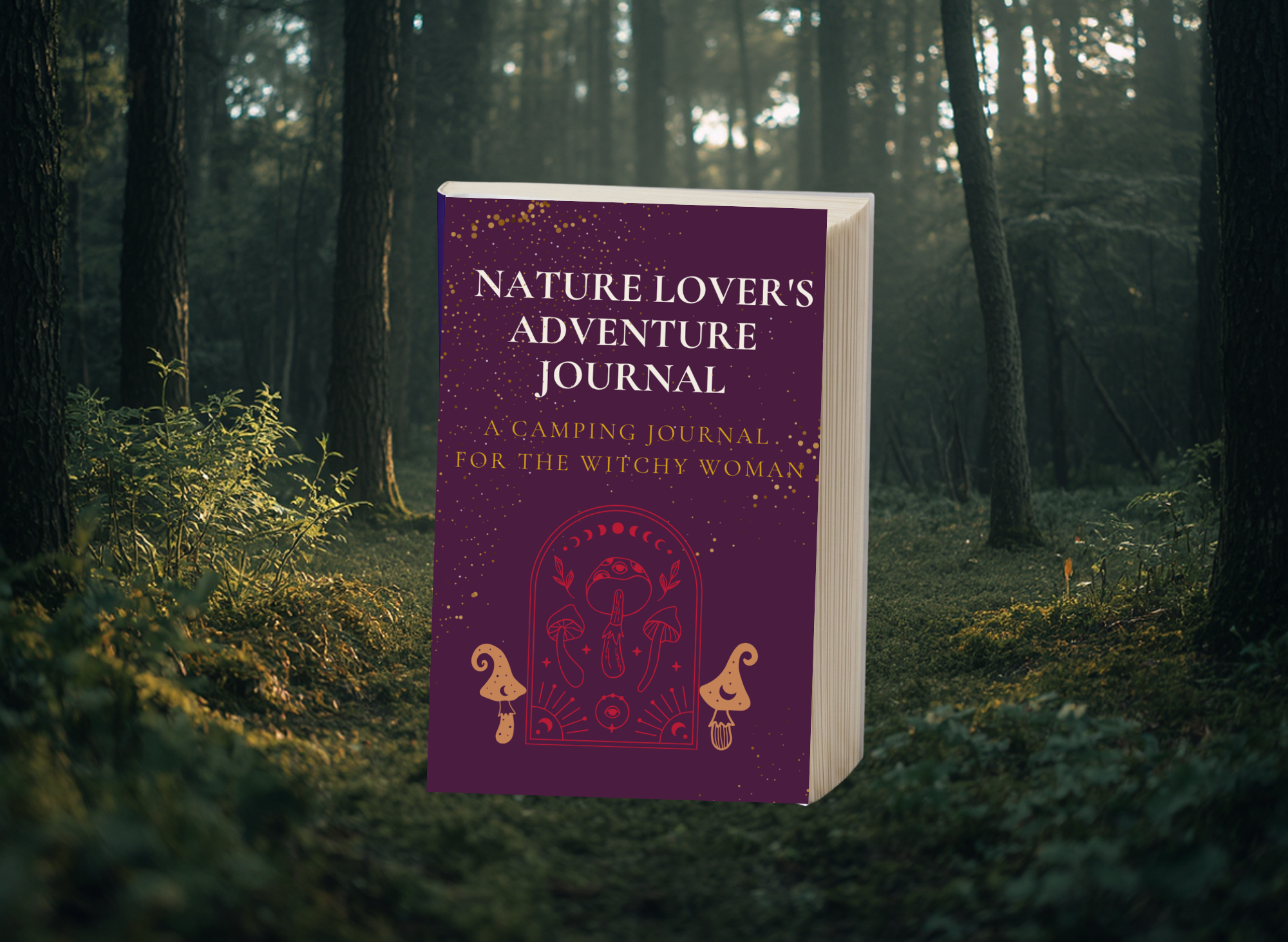
What should a beginner forage first? Dandelion and plantain. Both are nearly unmistakable, abundant, and useful — perfect confidence-builders. Do I need expensive equipment? A basket or paper bags, scissors, a field guide, and a journal. That’s the whole kit. Is it legal to forage? On your own land, yes. Public lands vary — national forests often allow personal-use gathering; most state and city parks don’t. Always check first.Record your first find: Nature Lover’s Adventure Journal → External sources referenced: USDA PLANTS Database · Chestnut School of Herbal Medicine — foraging resources · ImaginAcres — summer wild edibles
How to Build a Foraging Practice That Lasts
Most beginners quit herbal foraging for the same reason: they try to learn a hundred plants at once, get overwhelmed, and stop trusting themselves. The people who are still foraging a decade later almost all did the opposite. They learned three plants completely, in every season, on the same patch of ground, and then added three more.
Complete means you know the plant at every stage. What the first leaves look like pushing through in spring. What it looks like in flower, in seed, and dead in January. What grows next to it. What it smells like when you crush a leaf. A plant you only recognise in June is a plant you do not actually know.
The three-plant year
Choose three common, unmistakable plants growing within walking distance of your door. Visit them once a fortnight for a full year. Sketch or photograph them each time and write two lines about what changed. By month twelve you will know those three better than most books can teach you, and more usefully, you will have learned how to learn a plant.
Positive Identification: The Only Rule That Matters
Positive identification means you can name every feature that distinguishes your plant from every plant it could be confused with, and you have checked all of them, this time, on this specimen. Not “it looks right.” Not “it grows where the app said.” Every feature, every time.
- Use at least two independent sources and prefer a regional field guide over a general one. Plants vary by region and the look-alikes vary with them.
- Never rely on a phone app alone. Image recognition is a hint, not a determination. Treat it the way you would treat a stranger’s guess.
- Learn the dangerous look-alikes first. For any plant you intend to gather, learn its toxic mimics before you learn its uses. Knowing what to avoid is more valuable than knowing what to pick.
- When there is any doubt at all, leave it. There is no forage worth a hospital visit, and the plant will be there next year.
- Check with a qualified local expert before consuming anything new. A local foraging group, a botanical society, or an extension office will usually confirm an identification for free.
This is also why a written record matters more in foraging than in almost any other outdoor practice. Memory smooths details. Notes do not.
Reading the Land Before You Read the Plant
Experienced foragers find more with less walking because they read habitat first. Plants are not distributed randomly. They tell you about drainage, light, disturbance and soil, and once you can read those four things you stop hunting and start predicting.
Edges
The boundary between two habitats holds more species than either habitat alone. Hedgerow against pasture, woodland against meadow, the strip where a path meets a stream. If you have one hour, spend it walking edges.
Disturbance
Ground that has been broken recently, by a fallen tree, a track, or a flood, is colonised first by fast opportunists. Many of the most common useful plants are precisely these opportunists, which is why they cluster around human activity.
Water and light
Follow moisture gradients. The bottom of a slope, the north side of a wall, the margin of a ditch — each holds a different community from the ground twenty feet away. Note which side of the hedge you are on. It changes everything.
Where Not to Gather
Location matters as much as identification, because a correctly identified plant from the wrong place is still not safe to use.
- Roadside verges within about ten metres of a busy road, which accumulate exhaust residue and road salt.
- Field margins that may have been sprayed, which often look conspicuously clean and weed-free.
- Ground downhill of industrial sites, old landfill, or long-standing hard standing.
- Anywhere you do not have permission. Access law varies by country and by parcel, and the goodwill of a landowner is worth more than a basket.
- Protected sites and any species with legal protection where you live. Check before, not after.
Timing, Season by Season
Foraging is a calendar practice more than a location practice. The same patch of ground offers something different every six weeks, and the people who feel like the land is generous are simply the ones who show up on the right week.
- Early spring. First greens and shoots, when growth is tender and the plants are easiest to over-harvest. Take least here.
- Late spring into early summer. Flowers and leaf at full expression. The best window for learning identification, because every diagnostic feature is visible at once.
- High summer. Seed set begins. Aerial parts are at their most fibrous. Good for observation, less good for gathering.
- Autumn. Fruit, seed and root season, and the moment when the year’s notes pay for themselves, because you will only find the roots of plants you marked in flower months earlier.
- Winter. The season most people skip and the one that teaches the most. Structure, bark, buds and standing dead stems are how you learn to recognise a plant without its leaves.
Ethics: What a Third Actually Means
The common guidance to take a third and leave the rest is a floor, not a target, and it applies to what you can see rather than what exists. If you find a single stand of something, you have not found the population — you have found one stand. In a place where a plant is scarce, the right harvest is often nothing at all.
A more useful rule of thumb: harvest as though every other forager in your area will visit the same patch this month, because increasingly they will. That reframing turns abstract sustainability into an arithmetic you can actually do while standing there.
Leave the largest and healthiest specimens. They are the ones carrying the strongest genetics into the next generation, and the habit of taking the best first is how a common plant becomes an uncommon one over a decade.
Why Every Forager Keeps Records
A foraging journal is not sentimental. It is the difference between a hobby that resets every spring and a practice that compounds. Written across a few years, your own notes become more accurate for your ground than any published guide, because published guides are averaged across a continent and your notes are specific to a hedge.
- Date and location, always. Precise enough to return to. A description plus a rough grid reference beats a memory.
- What was in flower nearby. Companion species are the fastest way to relocate a patch a year later.
- Weather in the preceding fortnight. This is what lets you predict timing in future years rather than guessing.
- What you did not take, and why. The record of restraint is the record that keeps a patch alive.
- A sketch, however poor. Drawing forces you to look at the features you would otherwise skim.
Frequently Asked Questions About Herbal Foraging for Beginners
How many plants should a beginner learn in the first year?
Three, thoroughly, across all four seasons. Ten superficially is worse than three completely, because superficial knowledge is exactly the kind that leads to a confident misidentification.
Are foraging apps reliable?
They are useful for narrowing a possibility and unreliable as a final answer. Use one to generate a hypothesis, then confirm it against a regional field guide and, for anything you intend to consume, a knowledgeable person.
Is foraging legal?
It depends entirely on where you are and who owns the ground. Rules differ between countries, between public and private land, and between species. Check your local regulations before you gather, and ask permission where land is privately held.
What is the single most common beginner mistake?
Gathering before observing. The instinct is to leave with something. The practice that actually builds skill is walking the same ground repeatedly with an empty basket until the plants become familiar in every season.
Can I forage in a city?
Yes, with more care about site history than about species. Urban edges, parks and neglected corners hold plenty, but contamination risk is higher and land ownership is more complicated. Learn the ground before you learn the harvest.
Your Next Step
Pick your three plants this week. Walk to them, write the date, note what is flowering nearby, and go home without picking anything. That is the first entry, and the practice grows from there.
If you want the record-keeping already structured for you, the foraging and nature journals below give you dated pages, habitat prompts, and space for sketches, so the year builds into something you can actually use rather than a folder of photographs you never revisit.
Building a Local Reference of Your Own
Published field guides are averaged across a whole country or continent. Your own notes are specific to your ground, which after two or three years makes them more accurate for where you actually walk than anything you can buy.
- Keep a page per plant, not a chronological diary. Chronological entries are hard to use later.
- On each page: first leaf, flower, seed and die-back dates, year by year. Four dates a year builds a genuine phenology record.
- Note the companion species. This is how you relocate a patch and how you learn to predict where else it will be.
- Note the failures. Years it did not appear, years the fruit did not set. Absence is data and nobody records it.
After three years you will be able to predict, within about a week, when something will be ready near you. No guide can tell you that, and it is the point at which foraging stops feeling like luck.
A Last Word on Certainty
The most dangerous thing in foraging is not ignorance. It is the confidence that arrives in the second year, when you have learned enough to recognise plants quickly and not yet enough to know how much you are still guessing.
The habit that protects you through that stage is deliberate slowness: checking every diagnostic feature every time, even on a plant you have gathered fifty times, and saying out loud what it is not. Experienced foragers do this permanently. It is what makes them experienced rather than lucky.
Herbal Foraging: Where to Begin
Start your herbal foraging with three common plants within walking distance and visit them for a full year before you gather anything unfamiliar. Positive identification, every feature, every time, is the one rule herbal foraging does not bend on.