Autumn Equinox Journaling: A Balance Ritual for Mabon, September 22, 2026
The short version: autumn equinox journaling works best as review plus preparation rather than intention setting. Below are six questions to answer, a simple ritual, and a practical list for the darker half of the year. The point of autumn equinox journaling is to know what you are carrying before the light goes.
The autumn equinox arrives Tuesday, September 22, 2026, at 8:04 PM EDT — the moment when day and night stand at almost exactly equal length, and the year tips from growing into gathering.
In the old agricultural calendar this is the second of three harvests. Not the first, giddy one of Lammas in early August, and not the last, sober one of Samhain at the end of October. The middle one. The working harvest, where you find out what the year actually produced.
That is what makes it the most useful journaling day of the autumn — and the most commonly wasted one.
What the equinox actually marks
The astronomical fact is simple: the Sun crosses the celestial equator, and daylight and darkness balance. After September 22, the dark side wins a little more each day until the winter solstice.
The practical implication is less simple and more interesting. Balance is not a destination on the equinox. It is a threshold you pass through on the way to somewhere darker.
This gets flattened in most equinox content into “find balance in your life,” which is pleasant and does nothing. The real invitation is sharper: you get one day of genuine equilibrium, and it is the correct day to take an honest inventory before conditions change.
Farmers understood this. You do not stand in the field at the equinox and contemplate harmony. You count what you have, decide what stores and what does not, and get clear about whether it will carry you through winter.
The journaling version of that is a second-harvest audit.
The second-harvest audit
Set aside forty-five minutes on or near September 22. This works best done in one sitting rather than spread across days — the point is the whole picture.
Column one: what came in
List what the year has actually produced so far. Not what you hoped for. What exists. Finished things, changed things, relationships that deepened, skills that got real, money earned, boundaries held, habits that stuck.
Be generous and be literal. Most people significantly undercount this column because they are measuring against the January plan instead of against January itself.
Column two: what did not come up
The things you planted that did not grow. The projects that stalled, the intentions that dissolved, the version of this year that did not happen.
Write them down without explanation. The impulse to justify each one is strong and it is worth resisting for ten minutes — you are taking an inventory, not defending a case.
Column three: what to store, what to compost
Now go through both lists and mark each item. Store means it carries into winter and next year — keep it, feed it, protect it. Compost means it is finished, and its value now is as material for something else.
Composting is not throwing away. The failed project taught you the thing you now know. The relationship that ended clarified what you need. That is nutrient, and it goes back into the soil.
Most people have far more in the compost column than they expect, and feel considerably lighter after naming it.
The balance ritual (30 minutes, equinox evening)
Do this after the audit, ideally at dusk on September 22.
Set the scale. Put two small objects in front of you — stones, candles, apples, anything paired. One represents what you are carrying forward. One represents what you are setting down. This is not decorative; you are going to physically move them.
Speak the first side. Name aloud three things from your store column. Hold the first object while you do it. These are what the year gave you and what winter will be built on.
Speak the second side. Name aloud three things from your compost column. Hold the second object. Say, for each: this is finished, and I am keeping what it taught me.
Set them down. Place the first object somewhere you will see it through autumn — a windowsill, an altar, a desk. Take the second object outside and set it on the ground, or bury it, or leave it at the base of a tree. If you cannot go outside, a bowl of soil works.
Write one sentence. What I want the dark half of the year to grow.
That sentence is the seed. It goes into the ground now, in the dark, exactly as seeds are supposed to, and you do not check on it until the solstice.
12 autumn equinox journal prompts
- What did this year actually produce that I have not stopped to acknowledge?
- What did I plant that never came up — and can I name it without explaining it away?
- Where in my life is there genuine balance right now, and where is there none?
- What am I carrying into winter that I should have set down in August?
- What has this year’s failure taught me that its success could not have?
- Which relationship deepened this year, and what did I do that allowed it?
- What am I harvesting that I did not plant — luck, timing, other people’s work?
- What does enough look like for me between now and the winter solstice?
- What part of my life is asking to go dormant rather than be fixed?
- What did I give away this year, and what did it cost me?
- If the next three months are quieter, what would I want to have used them for?
- What is the one thing I want the dark half of the year to grow?
Marking the turn outside
The equinox is one of the few sabbats that is genuinely easier to feel outdoors than indoors. The light quality on the days around September 22 is unmistakable — lower, longer, more gold.
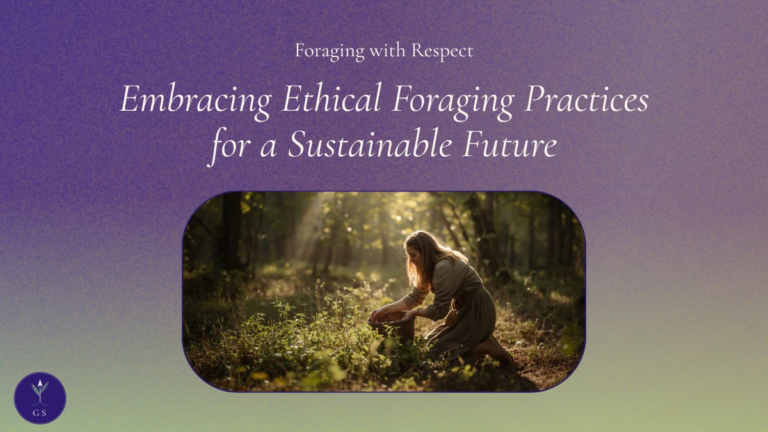
If you keep any kind of outdoor practice, this is the season when it changes character entirely. The abundance of summer foraging narrows to roots, nuts, seeds, and late fruit; the whole discipline shifts from gathering to putting by. The Nature Lover’s Wildcrafting & Foraging Journal has the logging structure for that turn — what you found, where, in what conditions, and what the same spot looked like a season ago. Second-year foraging notes are worth considerably more than first-year ones, and this is the moment they start compounding.
The equinox is also the exact hinge into Libra season, which begins the same day. If balance is genuinely the theme of this threshold, Libra is the sign that spends thirty days on it. The Libra Year Journal opens on that first-house season for Libras — 140 pages across all twelve zodiac seasons, with decision-making made gentle: one clear intention and one dated action per season, which is a mercy for anyone who finds choosing genuinely hard.

After the equinox
Do not do anything with your seed sentence for a while. That is the discipline of this particular turn.
The instinct after any good ritual is immediate action. But the equinox is not a launching point — it is a settling one. What you named goes into the dark and stays there. You are not abandoning it. You are letting it do the part of the work that only happens underground.
Check on it at the winter solstice. Not before.
Working with the wheel of the year?
The free New Moon Ritual Guide gives you the intention-setting structure that makes this stick — download it when you join the circle.
What the Equinox Actually Marks
The autumn equinox is one of two days in the year when daylight and darkness are close to equal, and after it the northern hemisphere tips towards the dark half of the year. That is the whole astronomical fact, and it is enough to build a genuinely useful practice on, without needing any additional claims.
What makes it worth marking is the direction of travel. The equinox is not a balance you arrive at and hold. It is the moment you pass through balance on the way somewhere, and the honest question it puts to you is what you want to be carrying when the light goes.
The Mabon Frame
Mabon is the modern name given to the autumn equinox in contemporary pagan practice, associated with the second harvest and with thanksgiving. Its history is more recent than often implied, which does not reduce its usefulness — a well-designed practice does not require an ancient pedigree to work.
What the frame contributes is a specific emphasis: gratitude paired with preparation. Not gratitude as a mood, but as an accounting of what the year has actually provided, followed immediately by a practical look at what the coming months will require.
Equinox Journaling: Six Questions
- What has this year actually given me, in specifics rather than sentiment?
- What did it cost, and was the price one I would pay again?
- What am I still carrying that belongs to the first half of the year?
- What will the dark half of the year ask of me that the light half did not?
- Who do I need to thank properly, and by what date?
- What do I want to have built by the spring equinox, six months from now?
That last question is the one worth returning to. Six months is long enough for something substantial and short enough to imagine clearly, and the spring equinox gives you a natural, non-arbitrary review date.
Preparing for the Darker Half
The practical preparations matter more than the ceremonial ones, particularly for anyone who finds the shorter days difficult.
- Protect morning light. Getting outside early in the day becomes disproportionately valuable as daylight shortens.
- Decide your evening structure now. Evenings expand in autumn, and an unplanned evening tends to fill with screens and low-grade restlessness.
- Reduce commitments before you feel you need to. Autumn over-commitment is usually made in September and paid for in November.
- Name one indoor thing you are looking forward to. Anticipation is a practical tool, not a sentiment.
- Notice how you responded last year. If low light reliably affects your mood or energy, plan for it now rather than in the middle of it, and speak to a professional if it goes beyond the ordinary.
A Simple Equinox Ritual
- Do it outside if you can, at whatever time of day is actually available.
- Mark the opening in the same way you would any ritual: one deliberate act, and say aloud what the time is for.
- Answer the six questions in writing, without editing them into something presentable.
- Name one thing to thank someone for, and send the message before you close the notebook. This is the step people skip, and it is the one that produces something in the world.
- Write the spring equinox date in your calendar with one line about what you intend to have built by then.
Frequently Asked Questions About the Autumn Equinox
When is the autumn equinox?
It falls around 22 or 23 September in the northern hemisphere each year, with the exact date and time shifting slightly. In the southern hemisphere the same date is the spring equinox.
Do I need to celebrate Mabon to use this?
No. The astronomical event and the journaling questions stand on their own, and the practice works whether or not you use any of the associated vocabulary.
Is the equinox a good time to set intentions?
It is better used for review and preparation, with the intention setting following at the next new moon. Six-month intentions from equinox to equinox are the exception and work well, precisely because the review date is fixed and meaningful.
What if autumn is hard for me?
Then the preparation list above is the most valuable part of this page, and it is worth doing early. If the shorter days affect you significantly year after year, that is worth raising with a healthcare professional rather than managing alone.
Before the Light Goes
Answer the six questions in one sitting, send one message of thanks, and write the spring equinox in your calendar with a single line about what you want to have built by then. Half an hour, once a year, and it shapes the six months that follow.
The astrology and lunar journals below carry both equinoxes and all twelve zodiac seasons in dated pages, with prompts written for your own placement rather than a general reading.
The Six Months From Equinox to Equinox
The most valuable thing the autumn equinox offers is a review date you cannot argue with. Six months from now the spring equinox arrives whether or not you have done anything, which makes it an unusually honest deadline — it is not one you set and can therefore quietly move.
Used well, this turns the darker half of the year from something endured into a defined working period. The instinct is to treat autumn and winter as a holding pattern until things get easier. The alternative is to name one thing that the quiet months are actually better suited to, and let that be the point of them.
What the dark half is genuinely good for
- Depth over breadth. Long-form work, study, writing, anything that needs uninterrupted hours rather than good weather.
- Repair and maintenance of things you have been running without servicing, including yourself.
- Slow-building skills that show nothing for weeks. Winter is forgiving of invisible progress in a way that summer is not.
- Planning that requires honesty rather than optimism. Ambition made in January is inflated by the calendar; a plan made in November tends to be more truthful about capacity.
Writing the Letter to Your Spring Self
One practice worth doing at the equinox and nowhere else: write a page addressed to yourself six months from now, seal it, and open it at the spring equinox. Not predictions. Say what you are carrying today, what you hope will have shifted, and what you want her to remember about this moment.
The value shows up entirely on the reading. Six months is long enough that you will have forgotten the texture of now, and being reminded by your own hand of what you were worrying about — most of which will have resolved itself — recalibrates your sense of how much of the current weight is permanent. Almost none of it is, and nothing demonstrates that as convincingly as your own handwriting from two seasons ago.
Marking It With Someone Else
The equinox is one of the few points in the year that is genuinely shared — it happens to everyone in the hemisphere on the same day — which makes it unusually well suited to being marked with another person.
It does not need to be elaborate. Ask one person the six questions over a meal and answer them yourself. What has this year given you, what did it cost, what are you still carrying, what will the dark half ask, who needs thanking, what do you want built by spring.
Asked properly, those questions produce a conversation most people do not otherwise have with anyone. And there is a practical benefit beyond the evening itself: an intention spoken aloud to someone who will see you again in six months is materially more likely to survive than one written privately.
Autumn Equinox Journaling: What to Keep
Autumn equinox journaling comes down to three acts: answer the six questions honestly, thank one person before you close the notebook, and write the spring equinox in your calendar with a line about what you want built by then. Half an hour of autumn equinox journaling shapes the six months that follow.
Autumn Equinox Journaling and the Six Months After
What makes autumn equinox journaling more useful than most seasonal writing is the review date it hands you. The spring equinox arrives in six months whether or not you have done anything, which makes it a deadline you cannot quietly move.
So finish your autumn equinox journaling by naming one thing you want built by spring and writing that date in the calendar. Autumn equinox journaling without a return date is a pleasant evening; with one, it shapes two seasons.