
Astrology Journaling: How to Use Your Birth Chart as a Self-Discovery Tool
Astrology journaling is the practice of using your birth chart — the map of the sky at the moment you were born — as a set of lenses for written self-inquiry. Instead of reading a horoscope and moving on, you write into the chart: exploring how your sun’s purpose, your moon’s needs, and your rising sign’s mask actually show up in your Tuesday afternoon.
Used this way, astrology stops being prediction and becomes what it has always done best: a mirror with extraordinary vocabulary. Whether you believe the planets cause anything is beside the point — the chart gives you precise, personal questions, and precise questions are what transform journaling from diary-keeping into self-discovery.
Start With the Big Three
You need three placements to begin — pull your free chart at Cafe Astrology or Astro.com (exact birth time needed for your rising sign).
Your Sun — the purpose lens
The sun sign is your core vitality: what you’re here to become. Sun journaling asks: Am I living this, or performing something else? A Leo sun asks where she’s dimming her light; a Virgo sun asks whether her service is devotion or self-erasure; a Sagittarius sun asks when she last let herself seek truth for its own sake.
Your Moon — the needs lens
The moon is your emotional engine room: what you need to feel safe, fed, and at home in yourself. Most of us were never taught our needs are legitimate, which makes moon journaling quietly radical. A Cancer moon needs belonging and asks who feels like home; an Aquarius moon needs space and asks where closeness has become confinement; a Scorpio moon needs depth and asks what truth she’s been circling.
Your Rising — the becoming lens
The ascendant is the mask, the doorway, the way you meet the world — and in many traditions, the path you’re growing into. Rising journaling asks: What does life keep inviting me to practice?
The Practice: 3 Rhythms
1. The weekly Big Three check-in (15 minutes). One prompt per placement, every week:
– Sun: Where did I feel most myself this week?
– Moon: Which need went unmet — and what did I do with the feeling?
– Rising: Where was I invited to grow, and did I walk through the door?
2. Lunar journaling (monthly rhythm). Each new and full moon lands in a sign — and lights up the part of your chart that sign rules. Journaling with the lunar cycle gives your practice a built-in calendar: intentions at the new moon, harvest and release at the full. (Start with our new moon intention setting ritual — and the Buck Moon ritual on July 29 lands in Aquarius next week.)
3. Season journaling (as the sun changes signs). We’re in Cancer season until July 22, then Leo season begins — each season emphasizes a different life theme for everyone. One page at each season’s start: What does this season’s energy want from me?
15 Astrology Journaling Prompts
- What three traits of my sun sign do I clearly live — and which one have I suppressed?
- When do I feel most radiant and alive? What placement does that sound like?
- What does my moon sign need daily that I currently treat as a luxury?
- How did my mother (or earliest caregiver) shape what comfort means to me? (Very moon.)
- What first impression do I make — and what is it protecting?
- Where is the gap between my rising-sign mask and my sun-sign truth?
- Which sign in my chart do I judge in other people? (That’s a shadow flag — see our shadow work prompts.)
- What recurring life lesson keeps finding me? Which house might it live in?
- How do I act when my moon needs go unmet for a week?
- What would I do this month if I fully trusted my chart’s permission?
- Which element am I starving — fire (action), earth (body), air (ideas), water (feeling)?
- What is this current season (Cancer/Leo) asking me to practice?
- What did the last full moon illuminate that I haven’t written down?
- If my chart is a team of twelve inner voices, which one never gets the microphone?
- What am I becoming that ten-year-ago me wouldn’t recognize — and does my chart describe her?
A Journal for Your Sign
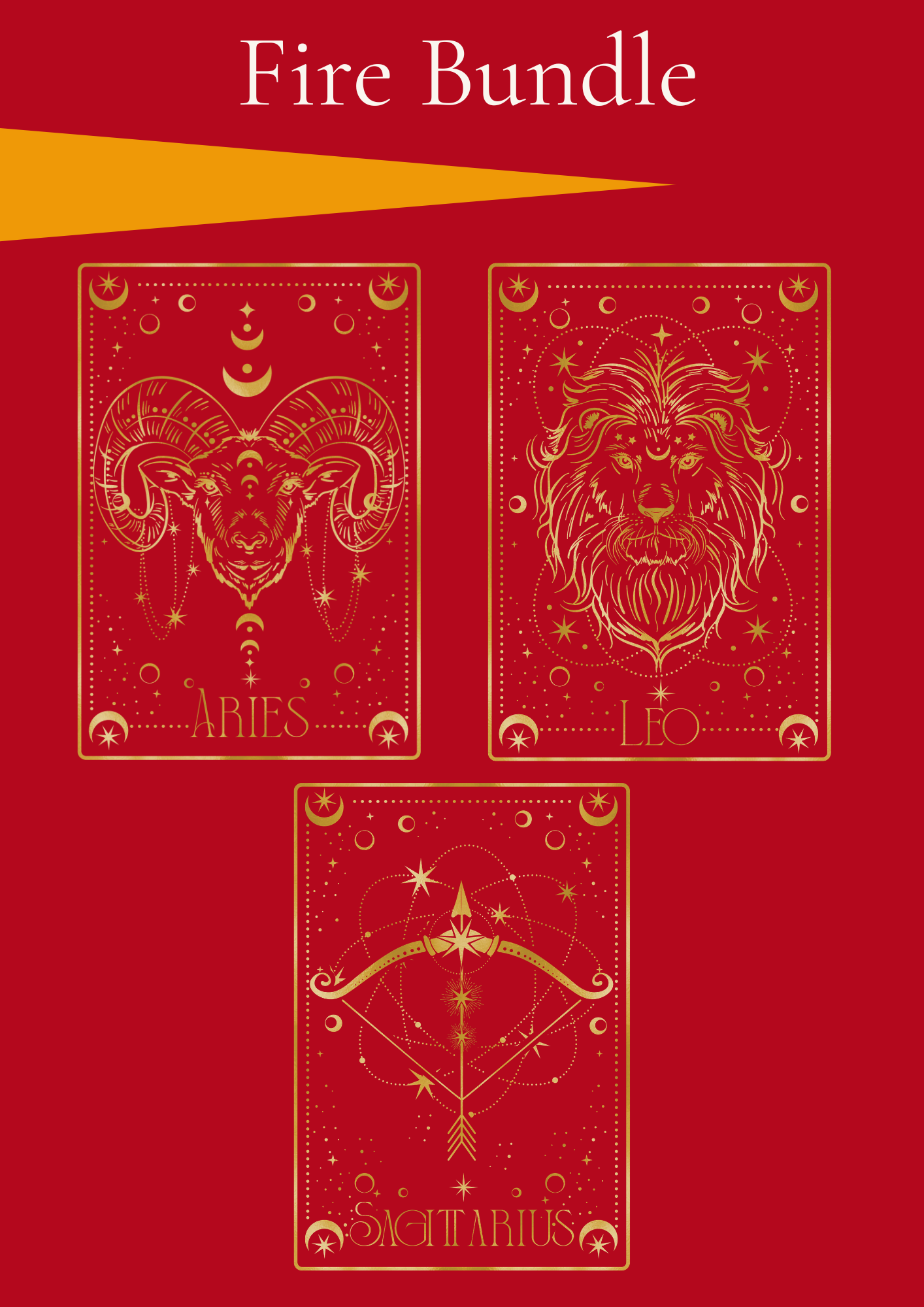
Generic notebooks treat every writer the same. But a Scorpio’s self-inquiry doesn’t sound like a Libra’s — different needs, different shadows, different doors in. That’s why the Astrology Journal collection — one dedicated journal for each of the 12 signs — is coming soon to the Clear collection, each built around its sign’s themes, strengths, shadow patterns, and season. Join the notify list on the collection page for launch access and the founding-member discount.
Want to go deeper on the lunar side while you wait? The Mother Moon Journal keeps your moon practice every cycle — or take the 2-minute journal quiz to find your starting point.
FAQ
Do I need to believe in astrology for this to work?
No. The chart works as a structured questioning system either way — the prompts are doing the psychological lifting. Belief is optional; honesty isn’t.
What if I don’t know my birth time?
You can still work with sun and moon (check the moon’s sign for your birth date — it changes every 2.5 days). Rising requires the time.
Sun, moon, or rising — which matters most for journaling?
The moon, by far. Needs drive behavior. Most people who feel “off” are living someone else’s moon.
Be first to journal by your sign: join the Astrology Journals notify list →
External sources referenced: Cafe Astrology — free natal chart · Astro.
The short version: astrology journaling turns a horoscope into evidence by recording what a transit was supposed to bring and what actually happened. Below you will find the prediction-and-outcome format, the four things worth tracking in your first year, and how astrology journaling keeps a predictive practice honest. Reading your horoscope is passive and forgettable. Astrology journaling is the practice of writing down what a transit is supposed to bring, then recording what actually happened, so that after a year you have your own evidence instead of somebody else’s generalisation. This is the difference between consuming astrology and using it. The consumer reads that Mercury is retrograde and feels vaguely braced. The journaler has three years of notes showing exactly which areas of her life get noisy during those weeks and, more usefully, which do not. The core structure is two columns and one honest habit. The strictness is what makes it work. Most people find, after a year, that a small number of transits are reliably meaningful for them and the rest are noise. That is an enormously useful thing to learn, and no book can tell you which is which. The chart is large and the temptation is to track everything. Track four things for the first year. A sun-sign horoscope is written for a twelfth of the population, which is why it reads as vague. The step that changes everything is knowing your rising sign and roughly which houses hold which signs, because that turns a general statement into a statement about a specific department of your life. You need an accurate birth time for this. Once you have it, the same transit that reads as “changes at work” for the general audience becomes “changes in the area of my chart that has always governed how I structure my days,” which is either true or not true, and can therefore be tested. Four times a year, at the equinoxes and solstices, read the previous quarter in one sitting. This is where the practice pays. The risk in any predictive practice is outsourcing agency. A journal is actually the best protection against it, because a written record makes the misses visible, and visible misses are what keep the practice honest. A good working rule: use astrology to generate questions, never to close them. “Is there something about how I handle commitment that is worth examining this month?” is a question a transit can usefully raise. “I should not sign anything this week” is a decision astrology should not be making for you. Not to begin. Start with the lunar cycle and your sun season, both of which need no technical knowledge. Chart literacy develops naturally once you have a reason to look things up. One, consistently, for at least a year. Comparing four sources produces a blur that cannot be tested. Pick one whose approach you find grounded and give it long enough to be assessed. That is a legitimate and interesting result, and the practice still gave you a year of dated self-observation, which is valuable regardless of what you conclude about the sky. Two to four lines. Long entries are unsustainable and, worse, they blur the record. Brevity is what makes a year of it readable in one sitting. Tonight, write today’s date, the current moon phase, and one line about your energy. That is it. Do that for a month before adding anything else. If you want the transits already dated and the seasons already laid out for your sign, the astrology year journals below walk all twelve zodiac seasons written for your placement, with room for the before, the after and the verdict. Of everything in an astrology journal, the page you will reread most is the one written on or near your birthday. A solar return page written every year, in the same format, becomes the single most valuable document in the practice, because it is the only place your life is described at the same point in the cycle year after year. That last item is the one that turns the page from a diary entry into a practice. Reading your own prediction from twelve months ago, before you write the next one, is a humbling and clarifying five minutes, and it does more for your relationship with forecasting than any amount of theory. Sooner or later a reading you trust will contradict what you are actually observing about your life. This is the moment that decides whether the practice is useful to you or not, and the right answer is to trust the observation. A framework earns its place by helping you see; it does not earn the right to overrule what you see. Note the disagreement in the journal, keep going, and see which one the following months support. A practice that can record its own misses is one you can safely keep for decades. The prediction-and-outcome page works for individual events. What makes the practice compound is a single running log kept for years — one line per notable transit, in one place, so that the fifth Saturn contact can be read next to the first. After two or three years the log starts answering questions no book can. Which planets genuinely track something in your experience. Whether your difficult months cluster seasonally rather than astrologically. Whether the transits you dread are actually the ones that produce anything. The most practical application of a personal log is timing, and it works even under a completely sceptical reading. If your own records show that you consistently sleep badly and make poor decisions in a particular fortnight each year, it does not matter whether the sky causes it. You now know not to schedule anything important then. That is astrology used as a personal almanac rather than as a forecast, and it is the version least likely to lead anywhere unhelpful. It relies entirely on your own observations, it is falsifiable, and it produces a genuinely useful calendar. One practical question comes up constantly: should the astrology log live in the same notebook as everything else? Keep them separate, and keep the astrology log short. The reason is that a transit log needs to be readable in one sitting years later, and interleaving it with daily reflection makes that impossible. A slim dedicated log — two lines per entry, one page per season — stays usable for a decade. Cross-reference rather than combine. When something notable happens in the main journal, note the date in the log. That is enough to connect them without turning either into something you stop keeping. If you do one thing, write the date, the moon phase and one line about your energy every evening. A year of that is astrology journaling in its most useful form, and it costs two minutes a day.Table of Contents
Astrology Journaling Turns a Horoscope Into Evidence
The Prediction-and-Outcome Page
Start With Four Things, Not Forty
Writing for Your Own Chart Rather Than a General Horoscope
The Seasonal Review
Keeping It Useful Rather Than Fatalistic
Frequently Asked Questions About Astrology Journaling
Do I need to know how to read a chart?
Which astrologer or source should I follow?
What if my predictions are mostly misses?
How much should I write per entry?
Your First Entry
Your Solar Return Page
When Astrology and Evidence Disagree
Building a Personal Transit Log
Using Astrology for Timing Without Superstition
Three rules that keep it healthy
Astrology and the Rest of Your Journal
Astrology Journaling: The Minimum Practice