
Nature Journaling: How to Start (+ 30 Prompts for Campers, Hikers & Backyard Wanderers)
Nature journaling is the practice of recording what you notice outdoors — in words, sketches, lists, or taped-in leaves — and it quietly transforms both the noticing and the noticer. A trail you’ve hiked ten times becomes new the first time you sit down to describe it. A camping trip stops blurring into the next one when its sounds, meals, and small adventures live on a page you can return to in February.
And there’s a deeper layer, especially now: time in nature measurably settles the human nervous system — studies summarized by the American Psychological Association link even brief nature exposure to lower stress, better mood, and improved attention. Journaling is how you metabolize that medicine instead of just walking through it. Pen plus pines is a potent prescription.
How to Start Nature Journaling (3 Rules, No Talent Required)
1. Lower the bar to the ground. A nature journal is not a sketchbook competition. Three observed sentences — “Rain stopped at noon. The whole campground smells like cedar. A jay has been yelling at us for an hour” — is a complete entry. Date, place, weather, one noticing: done.
2. Use the naturalist’s trio. For any thing that catches your eye, write three lines: I notice… I wonder… It reminds me of… This simple scaffold — popularized by nature-journaling educator John Muir Laws (free curriculum here) — turns glancing into seeing.
3. Try a sit spot. Choose one spot — campsite edge, backyard corner, trailside log — and sit for 15 quiet minutes before writing. The first ten minutes, nature waits you out. Minute eleven, it resumes around you. That’s when the page fills itself.
30 Nature & Camping Journal Prompts
Arrival & senses (1–8)
1. Describe this place to someone who will never see it — five senses, one paragraph.
2. What are the three loudest sounds right now? The three quietest?
3. What does the air smell like — and what memory does it open?
4. Sketch (badly, happily) one thing within arm’s reach.
5. What color appears most here? Find five versions of it.
6. What’s the oldest thing you can see? The newest?
7. Describe the light right now as if it were a mood.
8. What is moving? What is utterly still?
Camp life & adventure (9–16)
9. What was today’s best trail moment — and what almost made you miss it?
10. Record today’s camp meal like a food critic who loves everything.
11. What went wrong today, and what’s the funny version of that story?
12. Who are you out here with — and what do you notice about them away from walls and Wi-Fi?
13.What did you do today that the at-home version of you wouldn’t have?
14. Map your day: the route, the stops, the detour that turned out to be the point.
15. What wildlife crossed your path? Give the encounter its full three sentences.
16. Tonight’s sky: describe it without using the word “beautiful.
Reflection & inner weather (17–24)
17. What has your body felt out here that it doesn’t feel at home?
18. What worry shrank on the trail today? What truth grew?
19. When did you last feel this unhurried? What does that tell you?
20. What is this place teaching you about pace?
21. Write about the moment today you’d most like to keep.
22. What does “enough” mean out here — gear, food, plans — versus at home?
23. If this trip is a chapter in your year, what’s its title?
24. What do you want to remember about who you were on this trip?
Connection & return (25–30)
25. Thank this place in writing — specifically, for three things.
26. What would you protect about this spot if you could?
27. What from out here do you want to carry into your regular Tuesdays?
28. What conversation happened around the fire that wouldn’t have happened at home?
29. Describe the version of you who arrives home tomorrow.
30. When will you come back — and what will you check on when you do?
FAQ
Do I need to know how to draw?
No. Words-only nature journals are a centuries-old tradition. If you sketch, accuracy doesn’t matter — attention does.
What if I only have my backyard?
Perfect. Some of the deepest nature journaling happens in one ordinary place observed across seasons. The sit spot was made for backyards.
Nature journal vs. camping journal — which do I need?
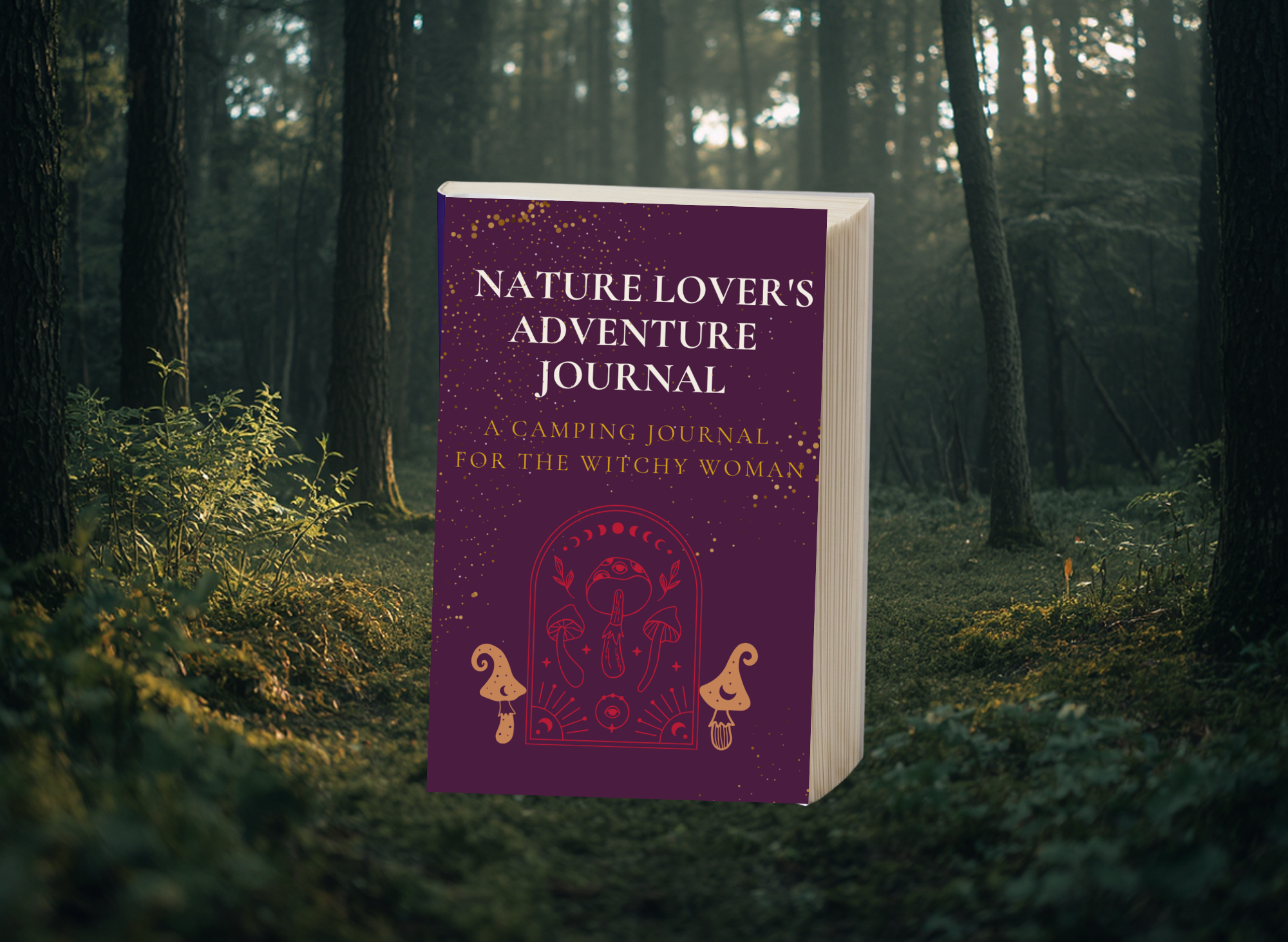
A camping journal is trip-structured (sites, routes, meals, memories); a nature journal is observation-structured. Many people keep both — one per kind of adventure. If you plan on doing both, then the Nature Lover’s Adventure Journal is the one for you.

Start Your Nature Journal Today
Nature journaling asks nothing but your attention. Step outside, notice one true thing, and write it down. Not sure which Growing Success journal fits your practice? Take our find your journal quiz to find the one that matches where you are.
Table of Contents
Download a free guided practice from our Free Resources library.
How to Use a Nature Journal Without Being Able to Draw
The single biggest barrier to nature journaling is the belief that it produces beautiful pages. It does not have to, and the people who get the most from it are usually the ones whose pages look worst. The purpose of drawing here is not representation. It is attention. A bad sketch of a leaf has already made you look at the leaf for four minutes, which is three minutes and fifty seconds longer than a photograph would have.
If drawing genuinely stops you, replace it with measuring and counting. Count the petals. Measure the leaf against your thumb. Write down the number of stems. Quantity forces the same close looking that drawing does, and nobody has ever been intimidated by counting.
The Three-Column Page
The most durable structure in nature journaling is also the simplest, and it comes out of scientific field practice: three columns on every page.
- I notice. Only what is observable. Colour, count, movement, sound, texture, position. No interpretation.
- I wonder. The questions that arise. Why is this one flowering and that one not? Why always on this side of the path?
- It reminds me of. Connections to anything else, including memories, other species, and things that are not nature at all.
This structure works because it separates observation from interpretation, which is exactly the discipline that turns casual noticing into genuine knowledge. It also gives you something to write when nothing seems to be happening, which is most days.
Prompts for Each Season
Spring
Choose one plant and visit it weekly. Record only what changed since last week. Find the first flower of any species and note the date; a phenology record of first flowering dates becomes genuinely valuable after three years. Sit for ten minutes and list every bird sound you can distinguish, without naming any of them.
Summer
Map one square metre in detail and count the species inside it. Track a single insect for two minutes and write what it actually did. Record the temperature and light at the same location at three different hours and note what is active at each.
Autumn
Collect five fallen leaves from the same tree and write how they differ. Record what is fruiting and what is eating the fruit. Note the first frost and what changed the following day.
Winter
Draw silhouettes rather than detail. Record tracks, including in mud rather than only snow. Find and describe five buds, which are formed the previous summer and hold next spring inside them. Winter is the season that teaches structure, and skipping it leaves a large hole in what you know.
The Sit Spot
Choose one location within five minutes of your door and return to it repeatedly. Same place, different days, different hours, all weather. The sit spot is the single practice most likely to change how you see, because familiarity is what makes change visible. On a new route everything is novel and therefore nothing stands out. On the twentieth visit to the same bench you notice a bird behaving unusually.
Ten minutes is enough. The first three are for your own noise to settle, and the last seven are the practice.
Turning Observations Into Knowledge
Individual entries are pleasant. Patterns are the payoff, and patterns only emerge from consistent recording plus deliberate review.
- Date everything, including the time and the weather. Undated observations are almost worthless later.
- Use the same location descriptors every time so entries are comparable.
- Review your journal at each solstice and equinox, reading the whole quarter at once.
- Keep a running list at the back of first appearances: first swallow, first frost, first bluebell. This becomes your most useful page.
- Write what you did not see as well as what you did. Absence is data.
Frequently Asked Questions About Nature Journaling
How long should each entry take?
Ten to twenty minutes is a sustainable session. Longer sessions are enjoyable and less repeatable, and repeatability is what produces the patterns.
Do I need to identify everything I see?
No, and insisting on it slows people down enormously. Describe first, identify later or never. An accurate description of an unidentified plant is more useful than a confident wrong name.
Paper or digital?
Paper, for this practice specifically. The friction is the point: a device invites you to look things up rather than look at them, and the looking is the practice.
What if I live somewhere with very little nature?
A window box, a street tree, a patch of moss on a wall and the birds on a roofline are enough. The method depends on repeated attention to one place, not on the grandeur of the place.
Start This Week
Pick your sit spot today. Go once, for ten minutes, and fill in the three columns. Then go back on a different day at a different hour. Two visits are enough to feel what the practice does.
If you want the columns, the dated pages and the seasonal prompts already laid out, the nature and foraging journals below carry the structure so you can spend your ten minutes looking rather than designing a page.
Nature Journaling With Children
Nature journaling works particularly well with children, and the reason has nothing to do with education. It converts a walk from a thing being done to them into a thing they are doing, and that shift changes their attention immediately.
- Lower the standard visibly. Draw badly yourself, out loud, and say so. A child who sees an adult make an unembarrassed bad drawing will make one too.
- Give them a job, not a lesson. Count the petals. Find three different leaves. Listen for four sounds. Jobs produce attention; instructions produce compliance.
- Keep it under fifteen minutes. End while they still want more, which is the oldest rule in teaching anything.
- Let them choose the sit spot. Ownership of the location does more for consistency than any amount of enthusiasm from you.
- Do not correct the identifications. Curiosity dies quickly under correction. Describe first, look it up together later if they ask.
Turning a Year of Entries Into Something You Keep
A journal that fills up and goes on a shelf has done half its job. A small amount of end-of-year work turns it into something you actually return to.
- Build a first-appearances page. Copy every first sighting and first flowering into one list with its date. This becomes the most consulted page in the whole book.
- Note the outliers. The unusually early bloom, the bird you saw once. Outliers are what make a multi-year record interesting.
- Write one paragraph on the year. What was different from last year in weather, in what appeared, in what did not.
- Carry forward five questions. The ones you wondered about and never resolved. Put them at the front of next year’s book.
After three years of this the first-appearances pages become genuinely valuable. You can see whether things are arriving earlier, whether a species has disappeared from your patch, and whether the year everyone described as late actually was. That is real local knowledge, and there is no way to buy it.
Journaling in Bad Weather
The instinct is to stay in, and the weeks people miss are the weeks that would have taught them the most. Wind, rain and cold change behaviour in the natural world dramatically, and a record that only contains pleasant days is a record of a fiction.
The practical adaptations are small. Pencil rather than pen, because pencil writes on damp paper. A card or a small board rather than a book. Five minutes rather than twenty. Write it up properly indoors afterwards while it is fresh. Nobody has ever regretted the entry made in the rain.
Journaling the Same Species for Five Years
The single most valuable nature journaling project available to an ordinary person with an ordinary amount of time is a five-year record of one species in one place. Not a survey. One plant or one tree, visited on a rough schedule, for five years.
- Pick something you pass anyway. A street tree, a hedge, the same patch of nettles. Convenience is what makes five years possible.
- Six visits a year is plenty. First growth, full leaf, flower, fruit, leaf fall, bare. Six dated entries annually.
- Record the same four things every time. Date, stage, weather in the preceding fortnight, and one thing that surprised you.
- Photograph from the same position. One image per visit, thirty images over five years, and the series will show you things no single observation could.
What emerges after five years is a genuine local record: whether flowering is creeping earlier, how a hard winter shows up eighteen months later, which years the fruit failed. This is the kind of observation that professional monitoring cannot cover at scale, and it belongs to whoever bothers to keep it.
What to Do With a Full Notebook
A completed nature journal usually goes on a shelf and stops being useful, which wastes most of what it cost to make. Half an hour of indexing turns it into a reference you will actually open.
- Number the pages if you did not as you went.
- Build a species index inside the back cover. Name, then the page numbers. This single step does most of the work.
- Copy the first-appearance dates onto one sheet so the year can be compared to the next at a glance.
- Flag five pages worth rereading with a corner fold or a tab.
- Write the year’s weather in three lines on the last page. Future you will need the context and will not remember it.
The Point of All This Noticing
It is worth saying plainly what the practice is for, because it is easy to lose in the method. The columns, the sit spot, the sketches and the dates are all in service of one thing: learning to look at something long enough that it becomes particular rather than general.
A tree stops being a tree and becomes that tree, on that corner, which flowered late this year. Once a handful of things around you have become particular in that way, going outside is a different experience permanently, and that is the whole return on the practice.